
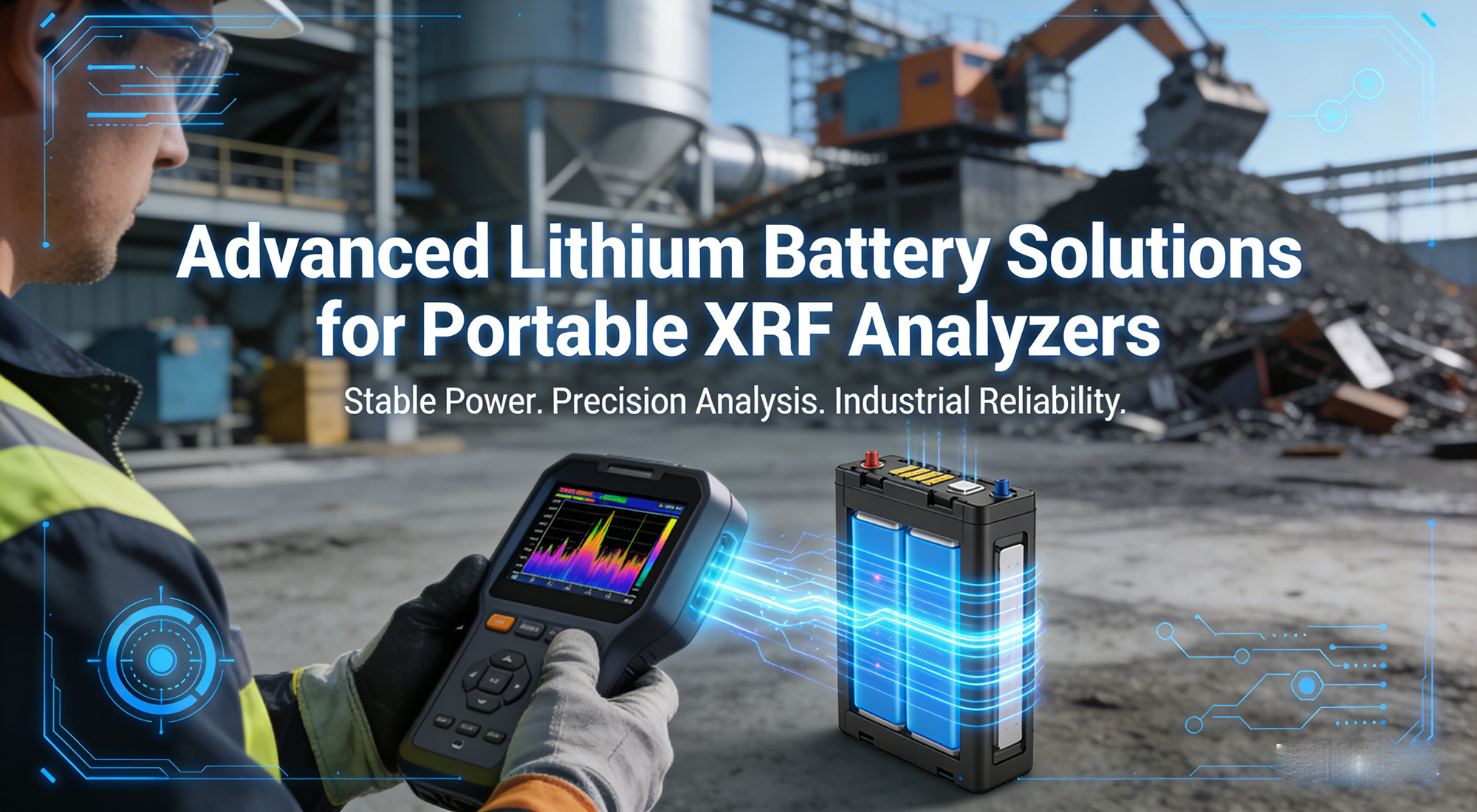
Custom Lithium Polymer Battery Packs for Construction Site Testing Tools
Lightweight, High-Discharge, and Ruggedized Power Solutions for Industrial Field Applications
Industrial Battery Solution
Reliable Power for Rugged Construction Environments
Construction site testing tools such as concrete moisture meters, rebar detectors, laser distance meters, and portable environmental monitoring devices operate in demanding outdoor conditions. These instruments require reliable, stable, and lightweight battery systems capable of delivering consistent voltage under vibration, dust exposure, temperature fluctuations, and high current bursts. Unlike stationary equipment, handheld testing tools prioritize portability and ergonomic balance, making battery weight and form factor critical design considerations.
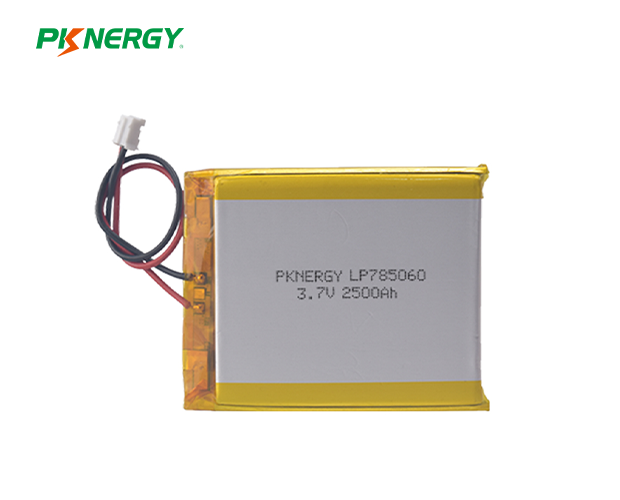
To meet these requirements, Custom Lithium Polymer Battery Packs provide an optimal solution. Lithium polymer (LiPo) technology offers high energy density (typically 180–220Wh/kg), flexible structural configurations, and strong discharge capability. This combination enables compact integration within handheld industrial tools while maintaining reliable output stability for precision measurement performance.
Key Power Requirements for Construction Testing Devices
Most construction testing tools operate within 7.4V–14.8V voltage platforms. These systems require high pulse current capability for laser modules, electromagnetic sensors, wireless data transmission, and digital display systems.
| Device Type | Voltage | Average Power | Peak Current |
|---|---|---|---|
| Laser Level | 7.4V–12V | 10–15W | 2–3A |
| Rebar Detector | 11.1V | 15–20W | 3–4A |
| Moisture Meter | 7.4V | 8–12W | 2A |
| Environmental Monitor | 12V | 18W | 3A |
To ensure stable performance, battery packs must support continuous discharge rates of 3C–5C and burst discharge up to 8C–10C without voltage sag. Lithium polymer batteries are particularly suitable due to their flat discharge curve and lower internal resistance compared to legacy battery technologies.
Typical Custom Lithium Polymer Battery Pack Specifications
| Parameter | Typical Configuration |
|---|---|
| Nominal Voltage | 7.4V / 11.1V / 14.8V |
| Capacity Range | 2000mAh – 6000mAh |
| Energy Output | 15Wh – 88Wh |
| Energy Density | 180–220Wh/kg |
| Continuous Discharge | 5C |
| Peak Discharge | 8C–10C |
| Cycle Life | 800–1000 cycles |
| Operating Temperature | -20°C to +60°C |
| Protection System | Smart BMS (OVP, UVP, OCP, SCP, OTP) |
Compared with traditional SLA batteries (30–40Wh/kg), lithium polymer packs significantly reduce weight while improving runtime efficiency. For broader industrial integration, PKNERGY also provides Industrial Automation Battery Solutions and modular pack configurations.
Runtime & Power Estimation
Battery runtime can be estimated using:
Runtime (hours) = Battery Energy (Wh) ÷ Device Power (W)
Example: An 11.1V 4000mAh LiPo pack provides approximately 44.4Wh.
| Device | Power | Estimated Runtime |
|---|---|---|
| Laser Level (12W) | 12W | ≈3.7 hours |
| Rebar Detector (18W) | 18W | ≈2.4 hours |
| Moisture Meter (10W) | 10W | ≈4.4 hours |
Under typical duty cycles (40–60% load), practical working time often extends to 5–7 hours, covering a standard jobsite shift.
Battery Technology Comparison
| Battery Type | Energy Density | Weight | Cycle Life | Best Use Case |
|---|---|---|---|---|
| SLA | 30–40Wh/kg | Heavy | 300–500 | Stationary equipment |
| Li-ion (18650) | 200–250Wh/kg | Medium | 800–1000 | Power tools |
| LiPo | 180–220Wh/kg | Lightweight | 800–1000 | Handheld testing tools |
Structural & OEM Integration Advantages
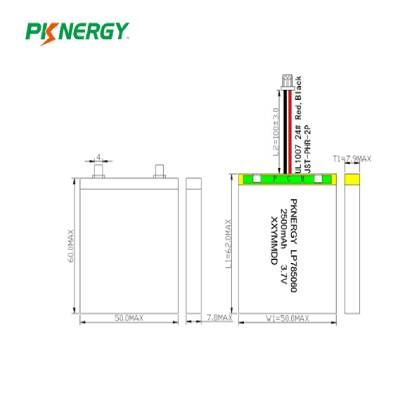
Custom lithium polymer battery packs can be engineered in flat, curved, or multi-layer stacked configurations, enabling seamless integration into compact handheld testers. PKNERGY supports complete OEM customization including connector types (JST, Molex, XT30), communication protocols (SMBus, I²C), and protective housing designs.
For customers requiring additional ruggedization, battery packs can be integrated with reinforced casing and sealing solutions suitable for dust-heavy jobsite conditions. Explore more customization options via our Contact Us page.
Application Scenarios
- Concrete moisture meters
- Rebar / embedded metal detectors
- Laser distance meters and leveling tools
- Portable environmental monitors
- Industrial inspection instruments
Frequently Asked Questions
Why choose lithium polymer instead of LiFePO4?
LiPo offers lighter weight and flexible form factors, making it better suited for compact handheld devices.
What discharge rate is required for testing tools?
Most devices require 3C–5C continuous discharge and up to 8C burst capacity.
Can battery packs be customized?
Yes. PKNERGY provides full custom lithium battery pack services for OEM integration.
Information Sources & Industry References
- Grand View Research – Global Construction Equipment Market Report
- IEC 62133 Safety Standard Documentation
- UN38.3 Lithium Battery Transport Testing Requirements
- Battery University – Lithium Polymer Technical Guidelines
Contact PKNERGY
Looking for customized lithium polymer battery packs for your construction testing tools? Our engineering team is ready to support your OEM project.
Email: sale@pknergy.com
Get a Quote: Contact Us
Sources & References
- Grand View Research – Portable XRF Analyzer Market Size & Industry Forecast
- MarketsandMarkets – Global Portable Analytical Instrument Market Report
- International Electrotechnical Commission (IEC 62133) – Secondary Cells and Batteries Safety Requirements
- UN38.3 Transport Testing Requirements – United Nations Manual of Tests and Criteria
- Battery University – Lithium-ion Battery Performance and Safety Guidelines
These references support industry growth projections, battery safety standards, and performance benchmarks mentioned throughout this article. For detailed technical consultation regarding portable XRF analyzer battery integration, please contact PKNERGY.