
Battery Swap Cabinets: Powering the Future of Electric Mobility with High-Performance Lithium Packs
Custom Lithium Battery Packs for Smart Swap Stations and Micro-Mobility Fleets
Introduction
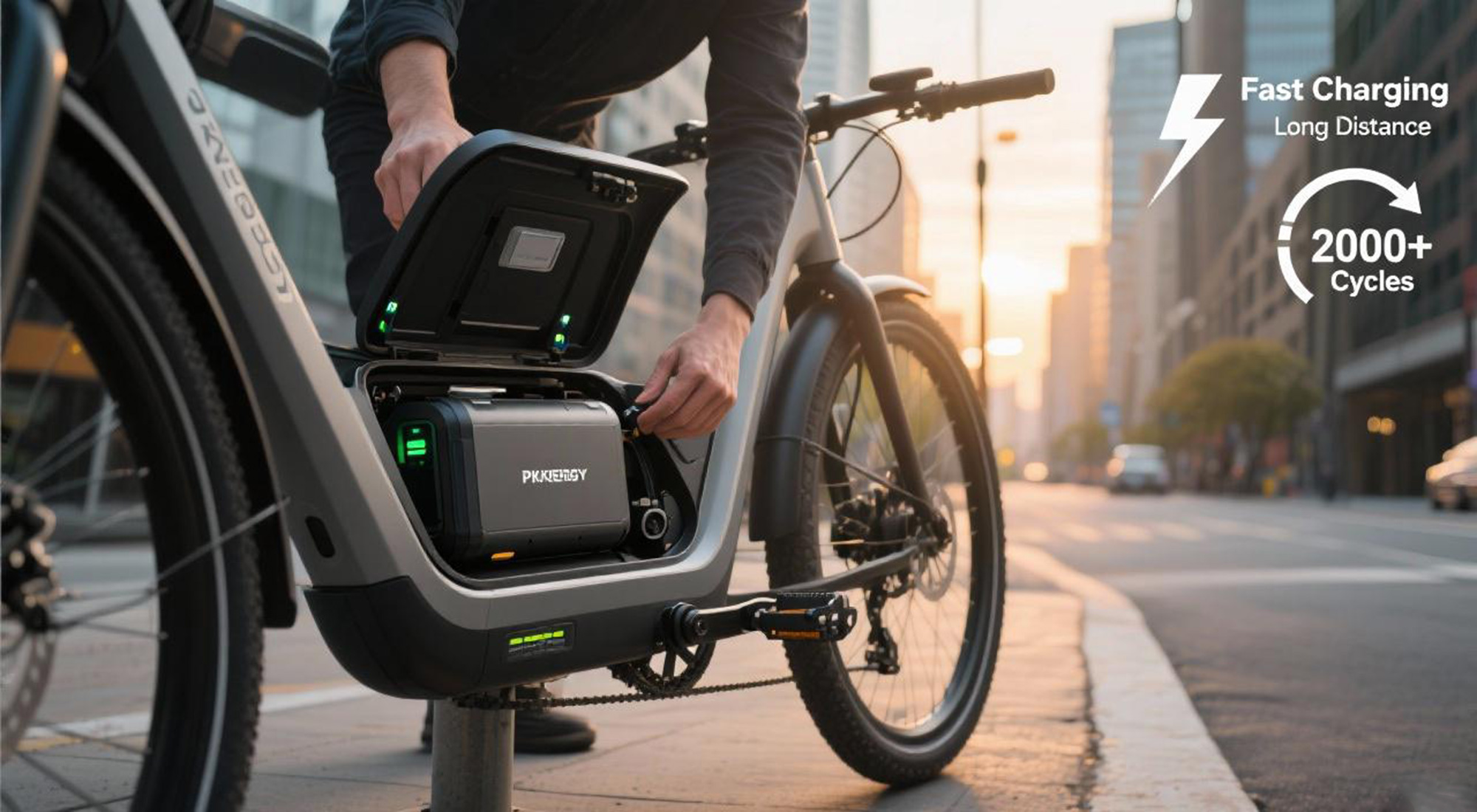
Battery swap cabinet systems have become a defining technology in the evolution of electric transportation. As more cities adopt electric scooters, e-bikes, delivery vehicles, and lightweight EVs, the need for fast, efficient, and scalable energy replenishment grows. Instead of waiting for traditional charging, users can replace a depleted battery with a fully charged one in seconds through a swap network.
This model dramatically improves efficiency for logistics fleets, food delivery businesses, and high-frequency riders. Behind this breakthrough system is a core technology: high-quality, durable lithium battery packs engineered for continuous charge–discharge cycles and demanding urban conditions.
For brands designing batteries for e-bikes, scooters, or small EVs, PKNERGY provides tailored solutions:
How Battery Swap Cabinets Work
A battery swap cabinet is essentially a smart charging hub that stores, monitors, and charges multiple lithium battery modules simultaneously. Inside the cabinet, each slot functions as an independent charging bay, equipped with sensors and communication modules. The swap station tracks each battery’s temperature, voltage, current, cycle count, and state of health.
Users authenticate via QR code, card, or mobile app. They insert their depleted battery and retrieve a fully charged one instantly. This eliminates downtime and makes true 24/7 operations possible for delivery riders, shared mobility platforms, and urban logistics fleets.
Why Lithium Batteries Are Critical to Swap Systems
For a swap network to function reliably, batteries must withstand:
- Multiple charge–discharge cycles per day
- High discharge currents during acceleration
- Rapid or opportunity charging demands
- Rough environmental and road conditions
- Long-term usage without significant capacity loss
Lithium-ion batteries excel in these areas thanks to their chemistry and pack design.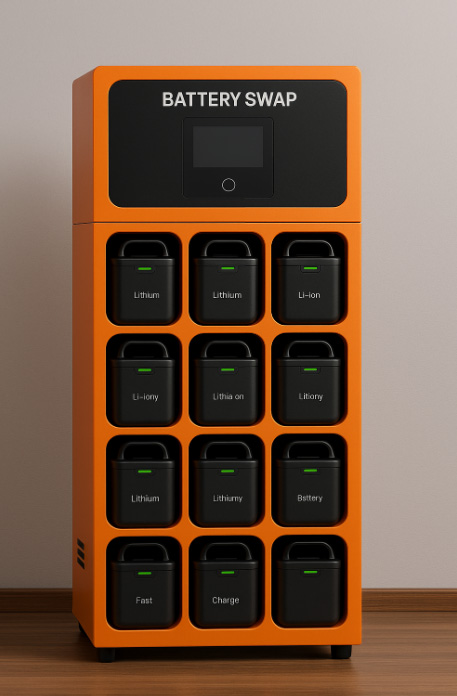
1. High Cycle Life
Swap batteries may undergo hundreds of cycles within a short period. High-quality cells, optimized pack structure, and well-designed BMS systems help them maintain performance and safety even under intense daily usage.
2. Strong Discharge Capability
Electric scooters, e-bikes, and delivery bikes require strong acceleration power and stable output. Lithium-ion chemistries provide reliable high-rate discharge, ensuring continuous motor performance and predictable riding experience.
3. Fast-Charging Compatibility
Swap cabinets rely on quick turnover; charged packs must be ready when riders arrive. Lithium batteries support optimized charging curves and intelligent charging strategies, improving operational efficiency and reducing waiting times.
4. Lightweight Construction
Reducing vehicle weight significantly improves speed, range, and handling—all essential for urban transportation and last-mile delivery fleets. Lithium packs provide high energy density in a compact, easy-to-swap format.
Looking for other application scenarios?
- AGV Power Solution for automated logistics
- Consumer Electronics Power Solution for smart devices
PKNERGY’s Custom Engineering for Swap Batteries
PKNERGY supports battery swap operators, micro-mobility brands, and smart city developers with complete engineering and manufacturing solutions. Our packs are designed for long-term field operation and smooth integration into smart cabinet systems.
Key technical capabilities include:
- Communication protocols: CAN, RS485, Bluetooth, etc.
- Real-time monitoring: voltage, current, temperature, cycle count
- Intelligent cell balancing and SOC/SOH estimation
- QR or RFID authentication modules for battery–user matching
- Anti-vibration mechanical structures to handle road shocks
- Fire-retardant casing materials and robust connector design
We support both NMC and LiFePO4 chemistries based on specific requirements for energy density, safety, cost, and expected service life.
Ensuring Safety in Swap Networks
Safety is the top priority in any high-density battery network. PKNERGY follows strict design and testing processes to ensure every battery returned to the swap station meets stable and safe operating criteria.
Our engineering roadmap covers:
- Overcurrent and short-circuit protection design
- Thermal protection and heat dissipation strategies
- High-current connector durability and mating cycle testing
- Long-term charge–discharge cycle testing
- Drop and vibration tests for real road scenarios
- SOC/SOH accuracy validation for smart network management
Conclusion
Battery swap cabinets are shaping the future of urban electric mobility by offering an efficient, scalable, and convenient way to power electric vehicles. Lithium-ion batteries provide the long cycle life, energy density, and discharge strength required to support such systems at scale.
PKNERGY is committed to supporting global partners with advanced custom battery designs, intelligent BMS solutions, and mass-production capabilities for battery swap networks, micro-mobility fleets, and smart city projects.
FAQ
What chemistries can PKNERGY use for swap batteries?
We support both NMC and LiFePO4 chemistries. The choice depends on energy density, safety requirements, cost targets, and actual usage scenarios.
Can PKNERGY integrate communication and tracking into the battery pack?
Yes. We can integrate CAN, RS485, Bluetooth, QR/RFID modules, and other communication features for real-time battery management in swap networks.
Are these batteries suitable for e-scooters and delivery e-bikes?
Absolutely. Our packs are specifically engineered for high-frequency cycling, strong discharge, and rough road conditions typical of scooters and delivery bikes.
Contact Cassie — PKNERGY
For cooperation opportunities or OEM/ODM customization of battery swap systems, please contact:
Email: sale4@pknergy.com
Phone/WhatsApp: +86 13974604556
Website: www.pknergybattery.com
More about PKNERGY: About Us | Get a Quote