
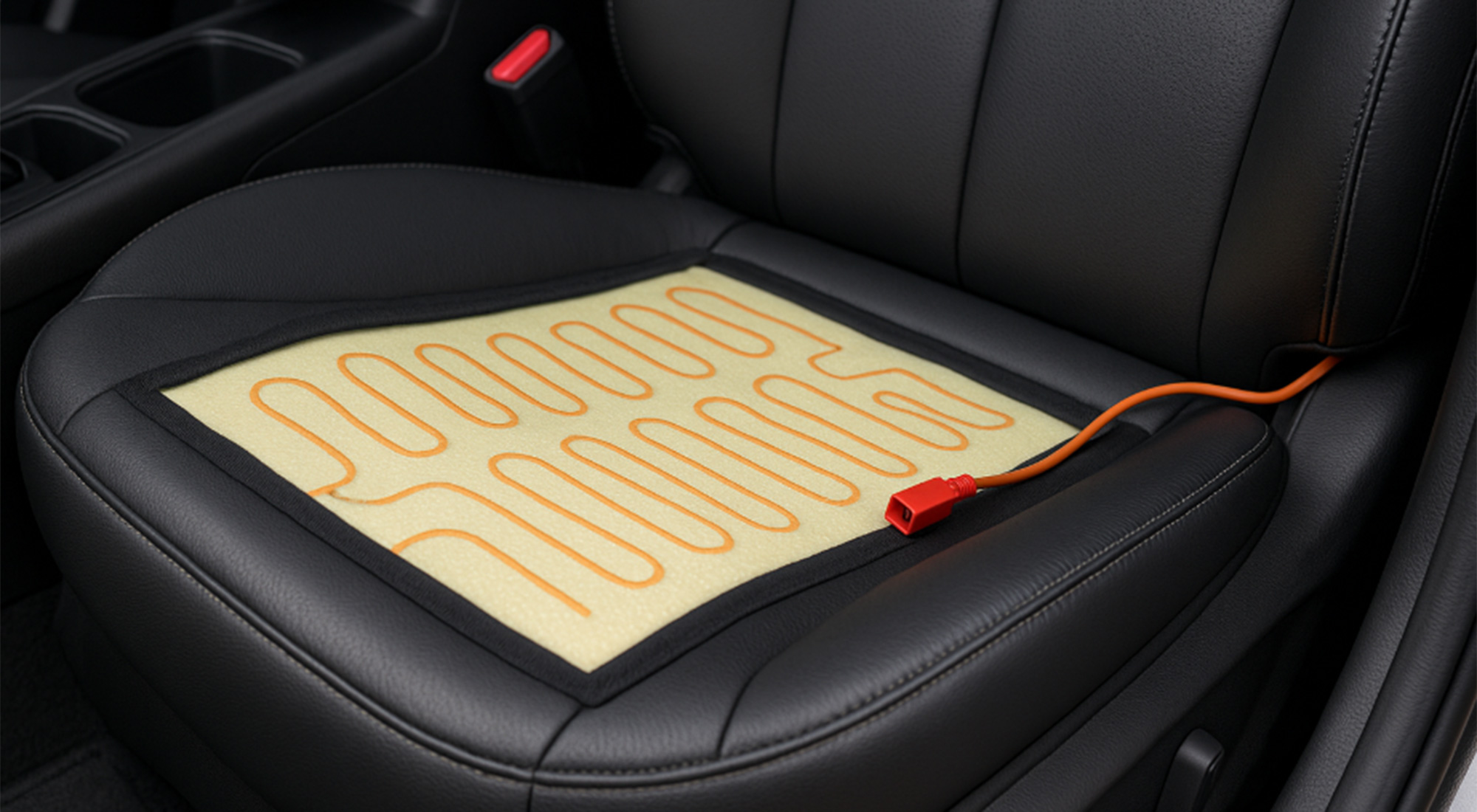
Powering Modern Automotive Heating Pads with Advanced Lithium Batteries
Industry Background: From Wired Seat Heaters to Smart, Portable Comfort
Automotive heating pads—commonly used in seat warmers, steering-wheel heaters, armrest heaters, and portable cabin-comfort accessories—have rapidly evolved over the past decade. As consumers demand higher comfort levels and OEMs push toward electrification, the need for reliable, high-power, and energy-efficient battery systems is growing. Traditional 12V vehicle power has long supported heated seats through direct wiring, but emerging applications—such as portable heating pads, aftermarket seat warmers, mobile therapeutic pads, and auxiliary heating systems for EVs—now require dedicated lithium-ion battery solutions capable of delivering consistent performance, safety, and long life.
Key Power Challenges for Automotive Heating Pads
Compared with many low-power in-car electronics, automotive heating pads impose significantly higher demands on the power system. Typical pain points include:
- High power demand: Many seat or pad heaters require 30–60 W or even higher continuous power.
- Thermal safety: The battery must operate safely in a heated environment and avoid local overheating or thermal runaway.
- Cold-temperature performance: Heating pads are often used in winter; cells must still discharge efficiently in low temperatures.
- Space constraints: Limited space inside seat cushions, armrests or portable pads demands compact, slim battery packs.
- Long cycle life and reliability requirements: Automotive applications require long-term, repeatable performance under daily usage.
Why Lithium and LiFePO4 Batteries Are Ideal for Automotive Heating Pads
Modern lithium-ion and LiFePO4 battery technologies offer a combination of high-power output, strong safety characteristics and long cycle life, making them an excellent fit for automotive heating pad systems.
High Discharge Capability for 30–60 W Heating Loads
Heating pads typically use resistive elements or carbon-fiber heating films that require stable power at 12 V or similar operating voltages. Properly selected lithium or LiFePO4 cells with low internal resistance can:
- Provide continuous power for seat, backrest and cushion heaters;
- Support multi-level temperature adjustment without large voltage drops;
- Handle inrush currents during startup and fast warm-up modes.
Excellent Thermal Stability and Safety Margin
LiFePO4 chemistry is especially valued in automotive environments for its high thermal stability and wide safety window. When combined with robust pack design and a suitable BMS, it provides:
- Lower risk of thermal runaway compared with many conventional chemistries;
- Better tolerance to high cabin temperatures in summer;
- Stable performance over long operating cycles.
Compact and Lightweight Design
Whether the heating pad is integrated in the seat, wrapped around the steering wheel or designed as a portable accessory, weight and thickness must be minimized. Lithium and LiFePO4 packs can be engineered in:
- Thin, layered constructions using pouch or prismatic cells;
- Curved or segmented modules for ergonomic seat integration;
- Compact modular packs for detachable aftermarket pads.
Long Cycle Life for Daily Automotive Use
Automotive users often rely on heating pads every winter day. LiFePO4 batteries in particular offer long cycle life, which helps:
- Extend product service life and reduce replacement frequency;
- Maintain effective heating power after hundreds or thousands of cycles;
- Support multi-year warranties and OEM reliability requirements.
PKNERGY Technical Design Focus for Heating Pad Battery Systems
To build reliable heating pad battery solutions, PKNERGY focuses on several critical engineering dimensions:
Battery Chemistry Selection
Depending on the project’s priorities—such as energy density, safety margin, cost and temperature range—PKNERGY helps customers select between high-power lithium-ion cells, LiFePO4 cells or hybrid configurations. Each option is evaluated against the heating pad’s power profile and packaging constraints.
High-Power Output Design
The pack is engineered to support continuous and peak loads, with proper conductor sizing, low-resistance connections and optimized series/parallel configurations. This ensures that heating elements receive stable current even under cold conditions or at maximum temperature settings.
Thermal Management and Mechanical Protection
Automotive interiors experience frequent temperature swings and mechanical stress. PKNERGY incorporates:
- Thermal insulation and heat spreading structures inside the pack;
- Reinforced casings and damping materials against vibration and shock;
- Layout isolation between battery components and heating elements where needed.
Smart BMS Integration
A tailored battery management system (BMS) is key to safe and intelligent operation. Functions can include:
- Over-charge, over-discharge and over-current protection;
- Temperature monitoring with automatic power derating if limits are exceeded;
- State-of-charge and health monitoring for predictive maintenance;
- Communication interfaces to vehicle control units or smart controllers.
Connector and Harness Customization
To match OEM and aftermarket installation requirements, PKNERGY can design custom:
- High-current connectors for quick assembly;
- Vehicle-grade wiring harnesses;
- Plug-and-play modules for seat or pad integration.
Typical Application Scenarios
PKNERGY’s lithium and LiFePO4 battery solutions can be applied across a wide range of automotive and mobility heating scenarios:
- OEM and aftermarket car seat warmers and cushion heaters;
- Steering-wheel and armrest heating modules;
- Auxiliary heating systems in EVs and hybrid vehicles;
- Therapeutic heating pads for in-car or mobile use;
- Heating pads in off-road, agricultural and recreational vehicles;
- Passenger comfort systems in commercial transportation fleets.
How to Select the Right Battery Pack for Your Heating Pad Project
For OEMs, Tier-1 suppliers and aftermarket brands, defining the correct battery specification early in the design process is crucial. Key points include:
- Target heating power (W) and voltage platform (e.g., 12 V, 24 V);
- Continuous and peak current requirements;
- Expected daily usage time and total cycle-life target;
- Operating temperature range, especially winter low-temperature limits;
- Available space, maximum thickness and mounting position;
- Required safety and automotive certifications.
With this information, PKNERGY can recommend optimum cell chemistries, pack configurations, BMS functions and mechanical designs, turning project concepts into reliable, production-ready energy solutions.
Conclusion: Lithium Batteries Enable Smarter, Safer Automotive Comfort
As automotive and mobility applications move toward higher comfort, electrification and smart control, heating pads are no longer simple resistive add-ons—they are becoming integrated comfort systems that demand robust, high-performance battery solutions.
By leveraging advanced lithium-ion and LiFePO4 technologies, PKNERGY helps OEMs, R&D teams and aftermarket brands build heating pad products that deliver:
- Stable high-power output for fast and uniform heating;
- Enhanced safety through advanced chemistry and intelligent BMS;
- Compact, lightweight pack designs suitable for tight automotive spaces;
- Long cycle life and strong reliability under real-world driving conditions.
If you are developing automotive heating pads or upgrading existing comfort systems, PKNERGY can provide a complete custom battery solution from concept evaluation to mass production. You can also reach our team via the Contact Us page to share your design requirements and application details.
Contact Miah | PKNERGY Energy Co., Ltd.
Email: sale@pknergy.com
WhatsApp: +86-139 0246 3897
Phone: +86-139 0246 3897