
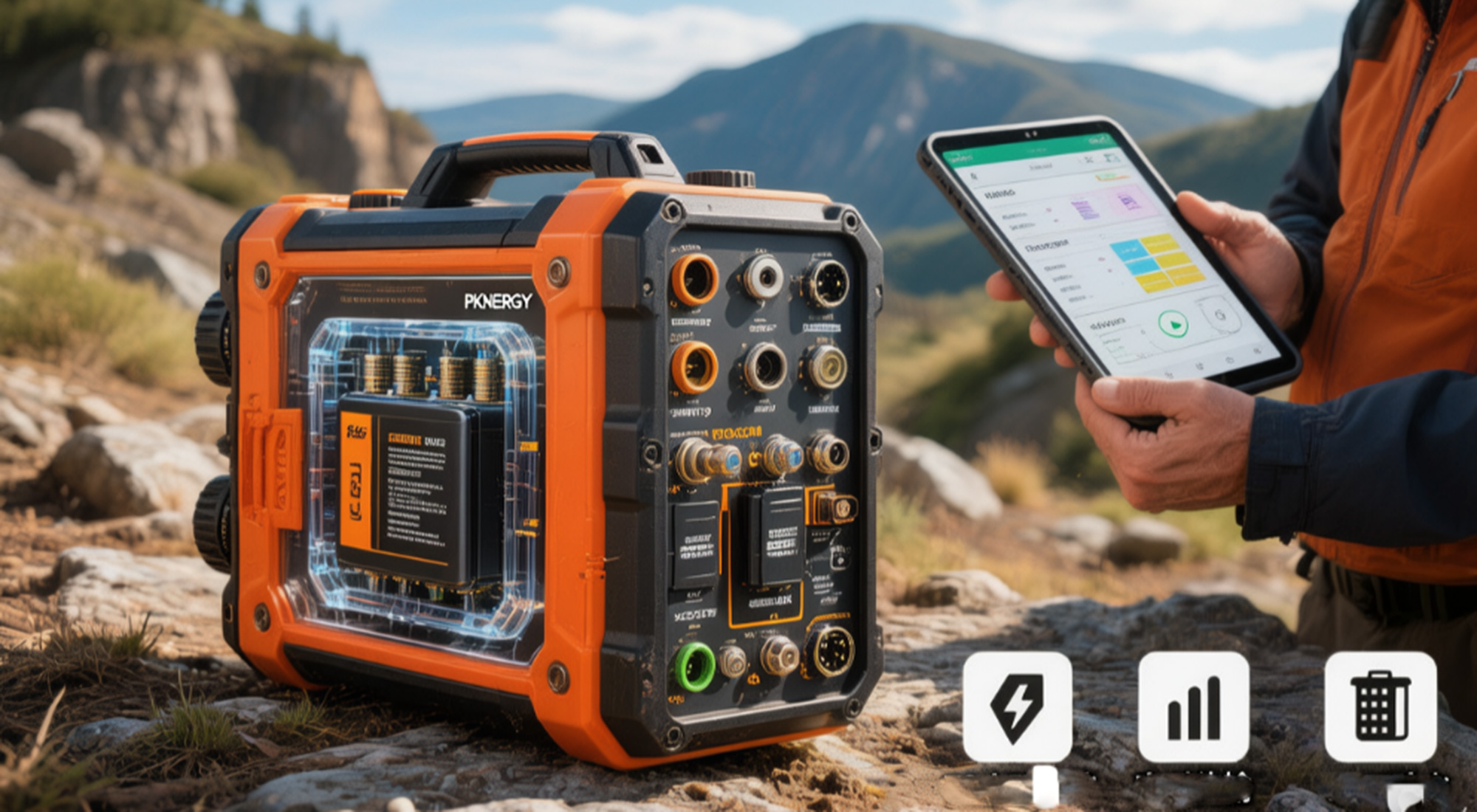
Why 18650 Lithium Batteries Are Essential for Geohazard Monitoring Nodes
Industry Background: Why Geohazard Monitoring Nodes Depend on Reliable Power
Geohazard monitoring systems – covering landslides, river floods, slope deformation, and geological instability – are a critical part of modern disaster-prevention infrastructure. Monitoring nodes are usually deployed in remote valleys, mountain ridges, unstable slopes, riverbanks, dams, and long-distance water channels where there is limited or no access to grid power.
To provide early-warning signals, a geohazard monitoring node must operate continuously, collect multi-parameter sensor data, and transmit information in real time via wireless networks such as LoRaWAN, NB-IoT, LTE-M, or satellite communication. In these harsh outdoor environments, the 18650 lithium battery pack becomes the core component that determines system stability, data reliability, and service lifetime.
Main Pain Points of Geohazard Monitoring Power Systems
Compared with indoor IoT devices, power systems for geohazard monitoring nodes face a much tougher set of challenges:
- Wide temperature range: Continuous exposure from −20 °C frost in winter up to +60 °C direct-sun heating in summer.
- High humidity and rainfall: Long-term moisture, condensation, and even periodic flooding around the installation area.
- Unattended long-term deployment: Once installed on remote slopes or riverbanks, on-site maintenance is difficult and costly.
- Pulse communication current: NB-IoT or satellite uplinks can require 1–2 A pulse current, far higher than the standby current of the sensors and MCU.
If the power system cannot handle these conditions, the result is frequent node downtime, missing data, and unreliable alarms – exactly the opposite of what a disaster-prevention system should deliver.
Why Choose 18650 Lithium Batteries for Geohazard Monitoring Nodes?
Among many battery options, 18650 lithium-ion cells stand out as a mature and cost-effective solution for geohazard monitoring. PKNERGY has already applied 18650 battery packs in multiple field projects and verified their performance under real outdoor conditions. Compared with lead-acid or small consumer batteries, 18650 cells offer the following advantages:
1. Wide Temperature Tolerance
High-quality 18650 lithium batteries can operate steadily in a typical −20 °C to +60 °C range, which matches the actual climate conditions of most mountain areas, river valleys, and open fields. With proper cell selection and pack design, PKNERGY can further optimize performance in low temperatures or strong sunlight, ensuring that the node continues to log and send data even in extreme weather events.
2. Strong Pulse-Current Capability
Many geohazard monitoring nodes use low-power MCUs and sensors for most of the time, but need a short current burst when sending data through NB-IoT, LTE-M, LoRa relay, or satellite. The internal resistance of the 18650 lithium cell is relatively low, enabling it to support 1–2 A pulse discharges without causing severe voltage sag. Through IR matching and pulse discharge testing, PKNERGY ensures that each pack can stably handle these bursts without random resets or communication failures.
3. High Energy Density and Long Deployment Lifetime
Geohazard monitoring installations usually have limited space for batteries and solar panels. 18650 lithium cells provide much higher energy density than traditional lead-acid or Ni-MH batteries, allowing a compact pack to support:
- Multi-month or even multi-year deployment with optimized duty cycle;
- Frequent data uploads during rainy seasons or flood periods;
- Backup operation during extended cloudy weather when solar input is low.
By combining right-capacity 18650 cells with low-power system design, the node can run reliably for years with minimal maintenance.
4. Mechanical Robustness for Harsh Terrain
Geohazard monitoring nodes are often installed on rocky slopes, bridge piers, or near rivers, facing vibration, impact, and occasional debris collision. Cylindrical 18650 cells, when integrated into a properly designed pack, provide:
- Good resistance to vibration and shock;
- Higher mechanical strength compared with many prismatic cells of the same size;
- Flexible and compact pack shapes for small waterproof enclosures.
PKNERGY designs cell holders, padding, and pack structures to withstand long-term outdoor mechanical stress while maintaining electrical performance.
5. Flexible Pack Configurations for Different Node Designs
Geohazard monitoring nodes can have different voltage and capacity requirements. By configuring 18650 cells in 1S, 2S, or 3S arrangements and adjusting the parallel strings, PKNERGY can quickly build customized packs to match:
- Low-voltage MCU platforms (typically 3.3 V or 5 V via DC-DC conversion);
- Higher-voltage communication modules or sensor loads;
- Solar charging schemes with MPPT or simple CC/CV controllers.
For example, PKNERGY’s 3.7 V 4400 mAh lithium-ion pack can be integrated directly into compact monitoring terminals, while larger multi-cell packs serve higher-power edge computing devices.:contentReference[oaicite:1]{index=1}
PKNERGY’s Technical Approach to Geohazard Monitoring Battery Packs
A typical geohazard monitoring node includes tilt sensors, accelerometers, water-level sensors, atmospheric sensors, edge processors, and long-range wireless modems. To ensure the power system can support this complete chain reliably, PKNERGY performs:
- IR matching: Screening 18650 cells by internal resistance to ensure consistent behavior under pulse loads.
- Capacity grading: Grouping cells with similar capacity for higher pack-level consistency and longer cycle life.
- Pulse discharge testing: Simulating NB-IoT, LTE-M, or satellite uplink current profiles to verify voltage stability.
- Temperature and humidity cycling: Testing performance under long-term high humidity, rainfall, and wide temperature swings.
- Protection circuit integration: Adding over-charge, over-discharge, over-current, and short-circuit protection for field safety.
In addition to standard 3.7 V Li-ion 18650 cells, PKNERGY can also provide special chemistries (such as wide-temperature or sodium-ion 18650 formats) to meet more demanding climate or policy requirements.:contentReference[oaicite:2]{index=2}
Typical Use Cases of 18650 Batteries in Geohazard Monitoring
PKNERGY’s 18650 lithium battery packs are widely suitable for:
- Landslide and rockfall early-warning systems on mountain slopes and highway cuttings;
- River flood and water-level monitoring along riverbanks and reservoirs;
- Slope deformation and settlement monitoring for railways and expressways;
- Dam and embankment monitoring nodes in hydraulic infrastructure;
- Roadside geological hazard alarm terminals in high-risk areas.
For OEM integrators and system developers, PKNERGY provides customized battery pack design services, helping shorten project development time and reduce field failure rates.:contentReference[oaicite:3]{index=3}
How to Choose the Right 18650 Battery Pack for Your Project
When selecting a battery pack for your geohazard monitoring nodes, consider the following key points:
- Working voltage and current profile: Define the node’s average current, peak pulse current, and required voltage range.
- Target deployment lifetime: Clarify whether the node is designed for 1 year, 3 years, or longer unattended operation.
- Environmental conditions: Temperature, humidity, possible flooding, UV exposure, and installation constraints.
- Charging strategy: Pure battery-only mode, solar-assisted charging, or hybrid power input.
- Certification and compliance: Requirements for UN38.3, CE, or other local standards for transport and deployment.
Based on these parameters, PKNERGY can recommend appropriate 18650 cell models, series/parallel configurations, protection circuits, and enclosure designs to build a robust, field-proven power solution.
Conclusion: Stable Power, Reliable Early Warning
Geohazard monitoring nodes operate in some of the most challenging environments in the world, but they must deliver accurate, real-time data for years with minimal maintenance. Choosing the right battery pack is therefore not just a component decision – it is a system-level reliability strategy.
By using well-matched and rigorously tested 18650 lithium battery packs, geohazard monitoring systems can achieve:
- Stable performance in wide temperature and high-humidity environments;
- Reliable support for high-pulse wireless communication;
- Long deployment lifetime and lower maintenance costs;
- Compact mechanical design to fit small, waterproof housings.
If you are designing or upgrading geohazard monitoring nodes, PKNERGY is ready to support you with customized 18650 battery pack solutions and engineering support from concept to mass production.
👉 Contact PKNERGY today to customize your geohazard monitoring battery solution.
You can also reach our team via the Contact Us page to discuss your specific project requirements.:contentReference[oaicite:4]{index=4}
Cassie | PKNERGY Energy Co., Ltd.
Email: sale4@pknergy.com
WhatsApp/Tel: +86 13974604556
Website: www.pknergy.com www.pknergypower.com