
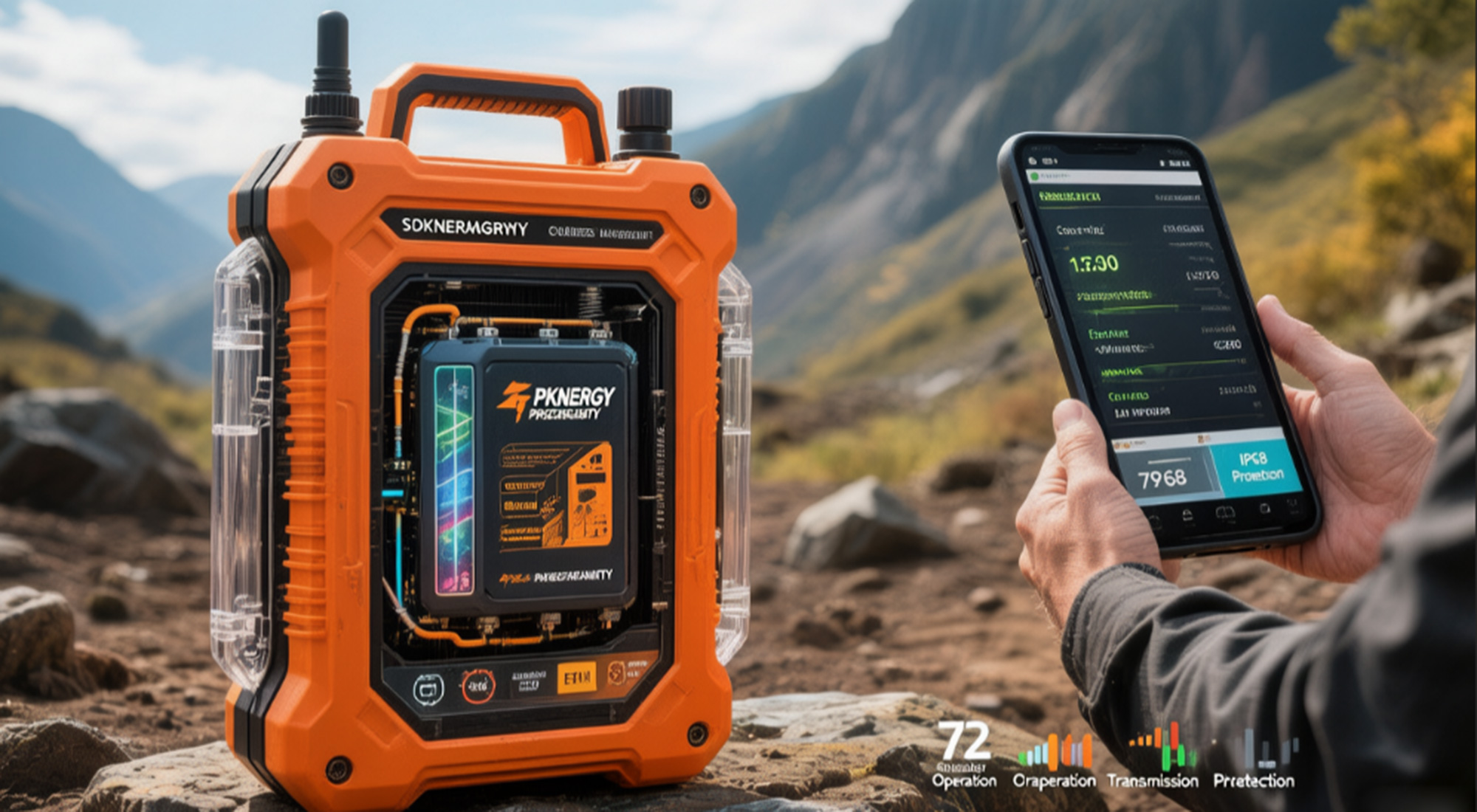
Powering Wildlife Monitoring Nodes with 18650 Lithium Batteries
Industry Background: Wildlife Monitoring in Remote Ecosystems
Wildlife monitoring systems used in forestry reserves, national parks, wetlands and remote ecosystems play a vital role in biodiversity protection, anti-poaching operations, ecological research and environmental conservation. These intelligent monitoring nodes typically integrate AI-enabled cameras, infrared sensors, acoustic monitors, GPS modules and long-range wireless communication to record animal activities and environmental changes in real time.:contentReference[oaicite:0]{index=0}
Most of these systems are deployed in regions without access to grid power. Long-term, maintenance-friendly battery solutions therefore become a key factor that determines whether the monitoring network can operate reliably for months or even years. Among the available options, 18650 lithium-ion batteries have become the preferred choice due to their excellent endurance and outdoor resilience.
Power Challenges in Wildlife Monitoring Systems
Compared with ordinary low-power IoT sensors, wildlife monitoring nodes usually have higher energy demands and stricter requirements for outdoor performance. Typical pain points include:
- High power consumption of cameras and sensors: Infrared night vision, PIR detection, AI inference, and high-resolution image or video capture all require substantial energy.
- Long-distance wireless transmission: Cellular, LoRa, or satellite communication often needs high-pulse currents to send data packets stably.
- Harsh outdoor exposure: High humidity, rainfall, temperature variation, insects and small animals can all affect the battery pack and electronics.
- Maintenance difficulties: Monitoring points are typically deep in forests, on mountains, or in wetlands, making frequent battery replacement or on-site maintenance very costly.
For system integrators and researchers, choosing the right power source is therefore not just a component decision, but a long-term reliability strategy.
Why 18650 Lithium Batteries Are Ideal for Wildlife Monitoring Nodes
18650 lithium-ion cells are a mature and proven technology. When designed into appropriate battery packs, they can effectively address the key power challenges of wildlife monitoring nodes.
High Energy Density for Long-Term Deployment
18650 cells offer significantly higher energy density than many traditional battery chemistries, allowing a compact pack to support:
- Long standby time for camera traps and sensor nodes.
- Frequent image or video capture during periods of high animal activity.
- Extended operation during rainy or cloudy days when solar charging is limited.
By combining efficient sleep modes, smart wake-up strategies and properly sized 18650 packs, wildlife monitoring systems can remain deployed in the field for months or years with minimal intervention.
Strong Pulse Performance for Camera and Wireless Operation
When the node wakes up, starts the camera, processes images and transmits data over long distances, the instantaneous current can be much higher than the standby current. 18650 lithium batteries have relatively low internal resistance and can provide the high-pulse current required for:
- Infrared or night-vision camera modules.
- AI inference chips or edge computing platforms.
- Cellular (NB-IoT, LTE-M), LoRa or satellite communication modules.
Proper cell matching and pack design ensure that voltage remains stable during these pulses, avoiding system resets or data loss.
Rugged Cylindrical Structure for Outdoor Use
The cylindrical metal casing of 18650 cells provides robust mechanical protection. In outdoor wildlife applications, nodes may be exposed to:
- Vibration caused by wind, tree movement or nearby animals.
- Occasional impacts when installed on trees, poles or hidden housings.
- Temperature cycling between day and night or across seasons.
With a properly designed battery pack structure, shock-absorbing materials and waterproof enclosures, 18650-based packs can withstand long-term outdoor use in forests, mountains and wetlands.
Stable Low-Temperature Discharge
Many wildlife monitoring projects are located in high-latitude forests or mountain regions where nighttime temperatures can drop significantly. Selected 18650 lithium-ion cells maintain relatively good discharge performance in low-temperature environments, reducing the risk of camera or communication failure during cold nights.
Flexible Voltage Architecture
Wildlife monitoring nodes vary in design. Some are ultra-low power camera traps; others are high-performance AI edge systems. 18650 cells can be configured into different pack architectures such as 1S2P, 2S1P, 3S1P or 2S2P to meet:
- Different system working voltages (for MCUs, cameras and communication modules).
- Different capacity requirements depending on standby time and image frequency.
- Different charging strategies, including solar-assisted charging.
PKNERGY can quickly customize pack configurations based on specific project requirements, ensuring both electrical and mechanical compatibility.
PKNERGY’s Engineering Approach for Wildlife Monitoring Battery Packs
A typical wildlife monitoring node requires power for PIR detection, infrared imaging, AI inference, audio capture, image compression and wireless transmission. To guarantee reliable power for this full chain, PKNERGY focuses on:
- Pulse-current calibration: Simulating camera startup and wireless transmission to verify pack behavior under actual load profiles.
- Temperature cycling: Testing performance across low and high temperatures to ensure stable operation across seasons.
- Humidity and rain exposure : Evaluating long-term behavior in high-humidity and rainfall environments.
- Salt-spray and corrosion resistance: For coastal wetlands and marine-related ecosystems.
- Custom BMS integration: Designing suitable protection PCBs or smart BMS modules to manage over-charge, over-discharge and over-current conditions.
In addition to standard 3.7 V lithium-ion packs, PKNERGY can offer tailored custom battery pack solutions for specific wildlife projects, shortening development cycles and improving overall system reliability.
Typical Application Scenarios
18650 lithium battery packs from PKNERGY can be adapted to a wide range of wildlife and environmental monitoring scenarios, including:
- Anti-poaching camera traps along patrol routes in protected reserves.
- Behavior and species monitoring in core habitats.
- Migration and habitat-change tracking for specific species.
- Forest fire-risk early warning nodes combining environmental sensing and camera monitoring.
- Wetland biodiversity assessment systems with multi-sensor platforms.
For compact camera traps and portable devices, PKNERGY can provide integrated 3.7 V lithium-ion packs. For more complex multi-module systems, higher-voltage and higher-capacity packs can be customized according to the total power budget.
How to Specify the Right 18650 Pack for Your Wildlife Monitoring Project
To design a reliable power system, it is important to clarify several key parameters early in the project:
- Average and peak current consumption: Standby current, active capture current, and the pulse current during wireless transmission.
- Expected deployment time: Whether the system must run for several months or several years without on-site maintenance.
- Environmental conditions: Temperature range, humidity level, risk of heavy rain, ice, or exposure to animals.
- Charging method: Pure battery-only design, or combination with a solar panel and charge controller.
- Mechanical constraints: Available space inside the device housing, mounting method and waterproof level.
Based on these inputs, PKNERGY can assist in selecting suitable 18650 cell types, determining series/parallel configurations, designing the protection circuit and creating a mechanically robust pack that fits your wildlife monitoring device.
Conclusion: Reliable Power for Long-Term Wildlife Protection
Wildlife monitoring nodes must survive in harsh outdoor conditions while capturing valuable ecological data and supporting anti-poaching operations. A well-designed battery pack is one of the most critical foundations for long-term, maintenance-friendly operation.
By using properly matched and thoroughly tested 18650 lithium batteries, wildlife monitoring systems can achieve:
- Long deployment life with reduced field maintenance.
- Stable support for high-power camera and AI functions.
- Reliable long-distance communication in remote areas.
- Rugged performance under temperature, humidity and mechanical stress.
If you are developing wildlife monitoring devices or upgrading existing camera trap systems, PKNERGY can provide customized 18650 battery pack solutions and engineering support from prototype to mass production.
Contact PKNERGY today to discuss your wildlife monitoring battery project and get a tailored 18650 power solution.
You can also reach our team via the Contact Us page to share your device specifications and application scenarios.
Cassie | PKNERGY Energy Co., Ltd.
Email: sale4@pknergy.com
WhatsApp/Tel: +86 13974604556
Website: www.pknergy.com www.pknergypower.com