
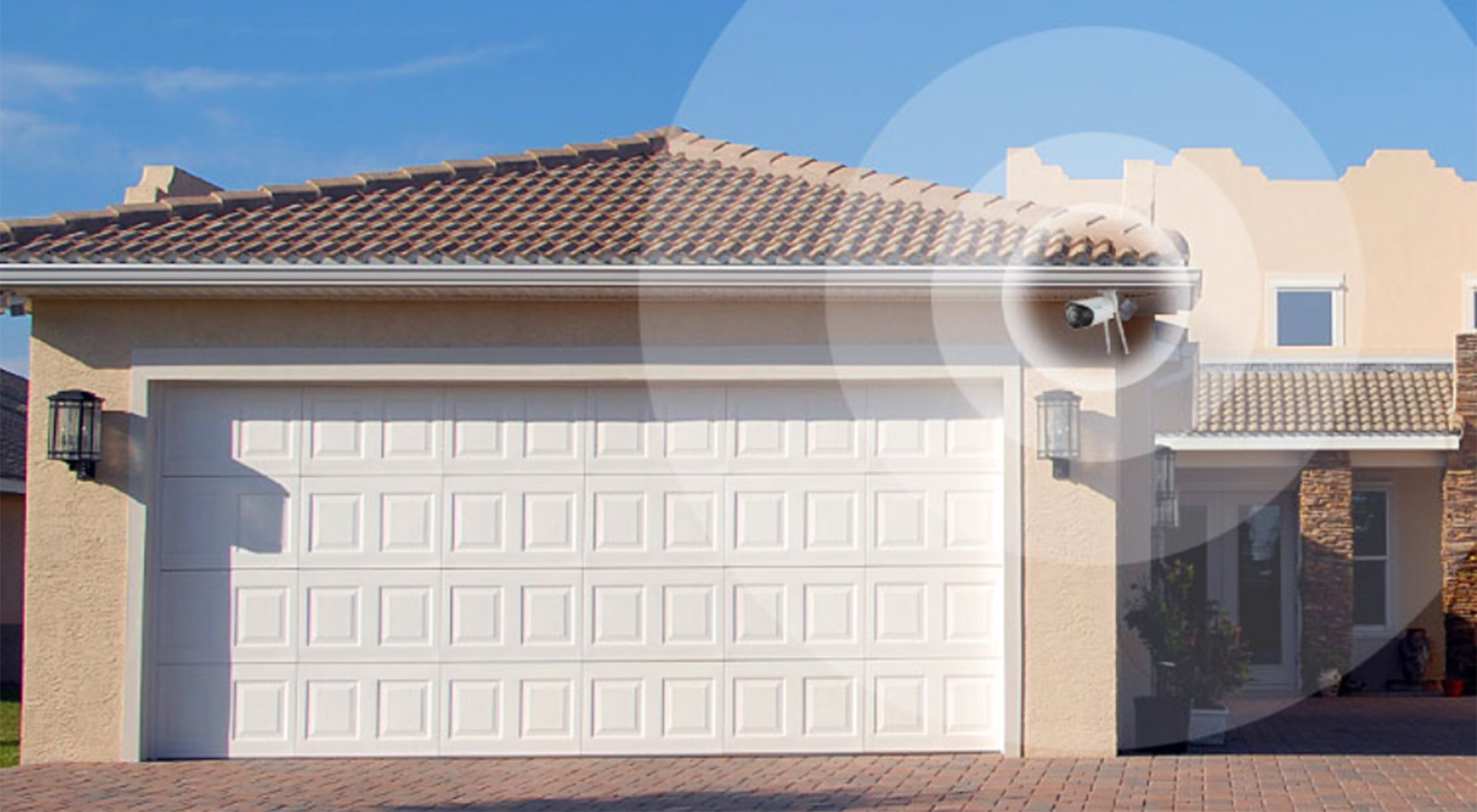
Lithium Battery Solutions for Garage Monitoring Wireless Cameras
Engineering Power Systems for Reliable IoT Surveillance
Industry Background
Garage monitoring wireless cameras have rapidly evolved from simple motion-triggered devices into full-featured edge-computing IoT systems. Modern users expect continuous visibility of garages, parking spaces, home entrances, storage areas, and micro-workshops without relying on AC power or wired network infrastructure. This shift toward wire-free deployment is driven by advancements in Wi-Fi/4G modules, compact image sensors, and embedded AI analytics—but none of these innovations function without a high-performance lithium battery system.
Manufacturers today compete not only on imaging quality or AI features but also on battery longevity, temperature durability, and energy efficiency. As a result, engineering teams must carefully design the IoT power system with optimized cell chemistry, protection electronics, and discharge management. PKNERGY supports OEMs globally with lithium battery engineering for IoT security devices, providing both standardized and
custom lithium polymer battery packs that balance energy density, safety, and cost.
Current Pain Points in Wireless Camera Design
1. High Peak Power Consumption
Garage cameras often include Wi-Fi/4G modules, PIR motion sensors, IR night-vision LEDs, image DSP chips, and AI processors. Each can trigger current spikes up to 1.5–2.0 A, causing voltage drops or accelerated battery aging if the cell is not optimized for pulse discharge.
2. Temperature Stress in Garage Environments
Garages frequently experience winter lows near 0 °C and summer highs exceeding 40 °C. These conditions accelerate lithium battery degradation and decrease capacity retention, especially in sealed camera enclosures with limited ventilation.
3. Standby Time vs. Active Performance
Users expect 6–12 months runtime, instant wake-up, and full-feature recording on demand. Balancing ultra-low standby consumption with high-load readiness requires a tuned battery plus BMS design that works together with the camera’s firmware and power management strategy.
4. Limited Mechanical Space
Slim enclosures restrict battery choices to 18650 cells or small Li-ion polymer packs (typically 2,000–6,000 mAh). Engineers must carefully choose between cylindrical cells and
flat pouch cells, while still meeting safety and lifetime requirements.
5. Safety & Certification Pressures
OEMs targeting global markets must meet UN38.3, IEC62133, CE/FCC and strict shipping requirements. A well-designed battery pack with verified test reports is essential for faster certification and smooth logistics.
Solution Value: PKNERGY’s Engineering-Centric Lithium Battery Design
1. High-Discharge Capability
PKNERGY batteries are engineered to handle peak currents during Wi-Fi wake-up, IR illumination, cloud upload, and AI inference. Stable voltage ensures continuous operation, reducing unexpected shutdowns or recording gaps.
2. Superior Cycle Life
Li-ion (NMC) solutions can deliver around 500–800 cycles under typical camera duty cycles, suitable for compact devices focused on maximum energy density.
LiFePO4 battery packs provide 1,500–2,500+ cycles with excellent thermal stability, ideal for long-lifetime security installations and harsher garage environments.
3. Custom Battery Pack Design
PKNERGY offers tailored pack designs, including 1S1P / 1S2P 18650 battery packs and slim Li-ion polymer cells. Designs can be optimized for your mechanical space, connector type, and mounting method. For projects needing higher safety or longer calendar life,
custom LiFePO4 battery solutions are also available.
We integrate low-Iq BMS boards, accurate fuel gauging, and optional Bluetooth monitoring for advanced IoT devices that require remote health diagnosis or predictive maintenance.
4. Enhanced Safety Architecture
PKNERGY pack designs include:
- Overcharge and over-discharge protection
- Short-circuit protection and resettable fuses
- Temperature monitoring with NTC or digital sensors
- Cell balancing and fault diagnostics for long-term reliability
5. Optimized Energy Storage
With low self-discharge cells and stable discharge curves, typical garage camera applications can achieve 6–12 months runtime depending on duty cycle, ambient conditions, and video usage patterns. PKNERGY works with your engineering team to simulate and validate realistic runtime before mass production.
Technical Insights
1. Chemistry Options
NMC (Li-ion) offers higher energy density, ideal for long video recording time in compact cameras where volume and weight are critical.
LiFePO4 provides excellent thermal stability, longer cycle life, and improved safety margin, a good choice for garage cameras installed in hot climates or regions with large seasonal temperature swings.
Li-ion Polymer cells give flexible shapes for compact devices, enabling ultra-slim camera designs, hidden cameras, or devices built into light fixtures or door frames. PKNERGY specializes in
custom Li-ion polymer battery design for such applications.
2. BMS Design Considerations
For battery-powered IoT security devices, BMS design is just as critical as cell selection:
- Ultra-low quiescent current (< 10 µA) to extend standby time
- Accurate cell balancing to maintain pack health over many cycles
- Adaptive cutoffs to protect the battery while allowing full use of usable capacity
- Data logging options for OEMs who want to monitor battery behavior in the field
3. Runtime Optimization Techniques
Battery runtime in garage monitoring cameras can be significantly improved by combining smart firmware with a well-engineered power system:
- PIR wake-up to trigger recording only when motion is detected
- Edge-AI event filtering to reduce false alarms and unnecessary uploads
- Dynamic transmission scheduling (Wi-Fi/4G) to batch data and reduce frequent RF wake-ups
PKNERGY’s engineering team frequently collaborates with IoT camera OEMs to align pack design with firmware power modes, ensuring that the final system meets the required 6–12 month service interval.
Use Cases
PKNERGY lithium battery systems are widely used in:
- Residential garage monitoring and smart home security cameras
- Parking lots and small commercial garages
- Small warehouses and storage facilities
- Construction sites and temporary surveillance deployments
- Rental properties and smart-lock or access control systems
- AI-enabled surveillance devices and other
security devices power solutions
For OEMs working with portable testers, handheld controllers or other garage tools in the same ecosystem, PKNERGY also offers
portable detection device power solutions and
consumer electronics power solutions, enabling a unified battery platform across multiple products.
Conclusion
The lithium battery system is a strategic enabler for wireless camera reliability. A well-engineered pack determines not only how long the camera can run between charges, but also how consistently it performs under real-world temperature, RF, and usage conditions.
PKNERGY’s custom lithium battery solutions for garage monitoring wireless cameras enhance product uptime, user satisfaction, and long-term field performance. Whether you need a compact NMC pack for a slim camera or a
LiFePO4 battery customization for harsher garage environments, our engineering team can support you from concept to mass production.
To see more applications, project cases, and product videos, you can also follow PKNERGY on
YouTube,
LinkedIn,
X,
Facebook, and
TikTok.
FAQ: Garage Wireless Camera Battery Solutions
How long can a wireless garage camera run on a PKNERGY lithium battery?
Runtime depends on battery capacity, camera power consumption, and usage profile. For typical Wi-Fi garage cameras with well-optimized firmware, PKNERGY packs can support around 6–12 months between charges. We can simulate your specific scenario based on peak current, standby current, and average daily recording time.
Which battery chemistry is better for garage environments, NMC or LiFePO4?
NMC offers higher energy density, making it ideal for compact cameras needing maximum runtime in limited space. LiFePO4 provides longer cycle life and better thermal stability, which is advantageous for garages with large temperature swings or higher ambient heat. PKNERGY can help you evaluate both options based on your priorities.
Can PKNERGY design a custom battery pack to fit my camera enclosure?
Yes. We specialize in custom lithium battery packs, including 18650-based and slim Li-ion polymer solutions. By sharing your mechanical drawings, power requirements, and certification needs, we can design a pack that matches your enclosure, connector type, and safety targets.
What certifications can PKNERGY battery packs support?
Our packs can be designed and tested to meet UN38.3, IEC62133 and related safety and transport standards. We provide supporting documentation to help your IoT camera pass global market access requirements and ship smoothly by air or sea.
Do you also support other security or IoT devices besides garage cameras?
Absolutely. PKNERGY supplies batteries for a wide range of security devices, portable detectors, smart locks, sensors, and other IoT hardware. If you are building a complete security ecosystem, we can help unify your battery platform to simplify purchasing and after-sales service.
Contact Cassie — PKNERGY Custom Battery Team
Ready to power your garage monitoring wireless cameras with reliable lithium battery solutions?
Get in touch with Cassie for technical support, custom pack design, and OEM pricing.
- Name: Cassie (Li Yingjun)
- Email: sale4@pknergy.com
- Phone / WhatsApp: +86 138 7460 4556
- Website: Contact PKNERGY
- LinkedIn: Cassie on LinkedIn
Share your device power requirements (voltage, capacity, peak current, ambient temperature, target lifetime), and PKNERGY will propose a suitable
custom lithium battery solution within a short lead time.