
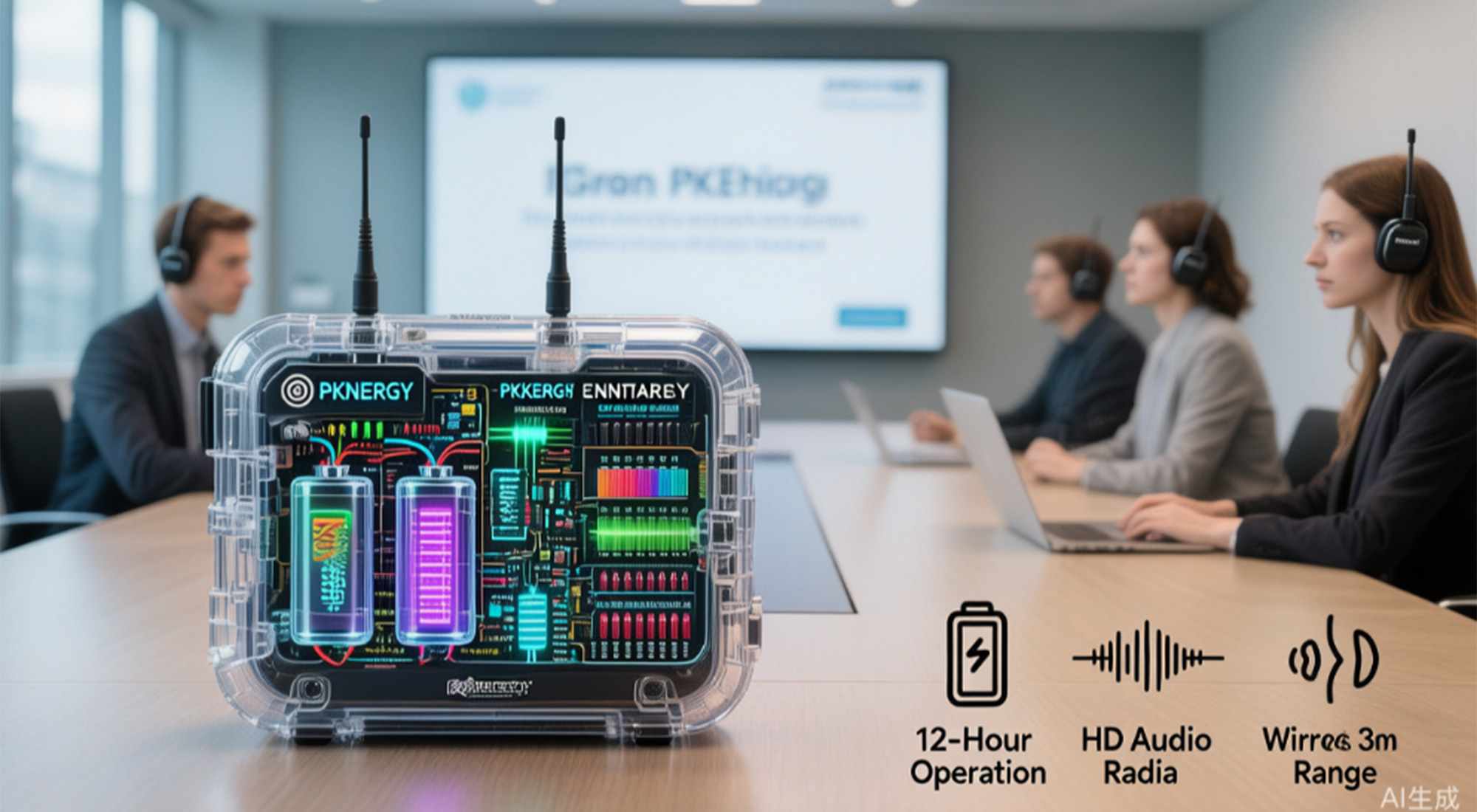
Powering the Next Generation of Wireless Personal Sound Amplification Systems
How advanced lithium batteries enable high-performance wireless PSAP devices with stable DSP processing, long runtime, and compact design.
Industry Background: The Rise of Wireless PSAPs
Wireless Personal Sound Amplification Systems (PSAPs) have rapidly evolved into an important category in modern
hearing-assistive and consumer audio technology. :contentReference[oaicite:1]{index=1}
Unlike traditional hearing aids, PSAPs enhance sound clarity for a broader user base—students, seniors, professionals,
outdoor users, and anyone needing improved hearing in daily communication.
Modern PSAPs integrate:
- Bluetooth LE Audio
- AI noise reduction & environment detection
- Directional microphone arrays
- Low-latency DSP signal processing
These features dramatically increase power consumption, making high-performance lithium batteries
the core of PSAP device reliability, comfort, and user retention.
Key Power Challenges in PSAP Devices
- Rising Power Consumption Affecting Battery Runtime
AI algorithms, multi-mic arrays, and real-time DSP significantly increase energy demands. PSAPs require
high-energy-density batteries to support all-day use. :contentReference[oaicite:2]{index=2} - Ultra-Compact Form Factor
PSAPs must remain extremely small and lightweight, limiting space for battery placement and requiring thin,
customizable lithium packs. - High Safety Requirements for Skin-Contact Wearables
Batteries must comply with UN38.3, IEC 62133, and include multi-layer protection for long-term safe usage. - Dependence on Stable Voltage Output
Voltage fluctuations can cause Bluetooth instability, DSP errors, and changes in sound amplification performance. - Need for Modern Charging Methods
USB-C, magnetic charging, and charging cases require battery systems that integrate safely with new charging standards.
Why Lithium Batteries Are Essential for PSAP Performance
Advanced lithium batteries—Li-ion, Li-polymer, and micro cylindrical—enable PSAPs to offer comfort, extended
runtime, and high acoustic performance. :contentReference[oaicite:3]{index=3}
- High energy density supports all-day use
- Lightweight design improves comfort for long-term wear
- Stable output ensures reliable DSP and wireless audio
- Custom shapes for ultra-compact structures
- Long cycle life reduces maintenance and replacement rates
- Eco-friendly & rechargeable for sustainable product design
For unique PSAP housing geometries, PKNERGY offers
ultra-thin wearable battery solutions
, including curved and micro-sized packs.
Technical Insights: LiPo, Micro Cylindrical & High-Drain Batteries
PSAP devices typically adopt a mixture of ultra-thin LiPo packs, micro cylindrical cells, and reinforced PCM/BMS designs
depending on output and runtime requirements. :contentReference[oaicite:4]{index=4}
1. Ultra-Thin Lithium Polymer Batteries
- Typical thickness: 3–6 mm
- Cycle life: 300–800 cycles
- Highly customizable for PSAP form factors
- Suitable for ear-hook, in-ear, or clip-on designs
2. Micro Cylindrical Cells
- Examples: 10180, 10220
- High volumetric energy density
- Strong metal housing for durability
- Ideal for modules requiring robustness
3. High-Drain Lithium Polymer Batteries
- 1C–3C discharge capability
- Reinforced PCM/BMS for high-power DSP and wireless load
4. Required Safety & Charging Protections
- Over-voltage / Under-voltage protection
- Over-current / Short-circuit protection
- NTC temperature sensing
- Compatibility with USB-C / magnetic charging
For medically oriented PSAP models, PKNERGY supports certification-ready solutions through its
Medical Device Power Solution
platform.
Typical Application Scenarios
High-performance lithium batteries power PSAP devices used in: :contentReference[oaicite:5]{index=5}
- Senior hearing enhancement
- Meetings, lectures & professional listening environments
- Outdoor & sports activities
- Entertainment audio improvement
- Consumers with mild hearing loss
These devices blend medical-level signal processing with
consumer electronics power technologies.
PKNERGY Custom Battery Solutions for PSAP Systems
PKNERGY develops custom lithium batteries for manufacturers building next-generation PSAP devices, including: :contentReference[oaicite:6]{index=6}
- Custom LiPo battery packs — ultra-thin, lightweight, flexible shapes
- Micro cylindrical lithium modules — high-density, durable metal casing
- High-drain lithium solutions for DSP and wireless systems
- PCM/BMS integration with multi-layer safety
- Support for USB-C & magnetic charging architecture
- UN38.3 / IEC62133 certification documentation
For future PSAP product roadmaps, PKNERGY also evaluates next-generation chemistries via its
sodium-ion battery customization
program.
PSAP Battery FAQ
1. Which battery type is best for compact PSAP devices?
Ultra-thin LiPo is ideal for small, lightweight designs; micro cylindrical cells are better for modules needing
mechanical durability and higher density. PKNERGY can evaluate both based on your ID structure.
2. How long can a PSAP run on a lithium battery?
Most PSAPs require 6–12 hours of runtime. PKNERGY calculates the exact capacity by analyzing your DSP,
microphone, and wireless consumption profile.
3. Are lithium batteries safe for skin-contact wearables?
Yes — when designed with proper PCM/BMS, NTC temperature monitoring, quality LiPo cells, and certification standards
such as UN38.3 and IEC62133.
4. Do you support USB-C and magnetic charging integration?
Absolutely. PKNERGY works with your charging and PCB teams to ensure safe, efficient charging architecture.
5. What do I need to start a custom battery project?
Share your device 3D space, voltage/current needs, runtime goal, PCB interface, and certification requirements.
PKNERGY will provide a full battery design proposal.
Contact Miah — PKNERGY
Developing wireless PSAP devices? PKNERGY provides LiPo, micro cylindrical, and high-drain lithium battery solutions
optimized for compact hearing-assistive wearables. :contentReference[oaicite:7]{index=7}
- Name: Miah (崔娟)
- Email: sale@pknergy.com
- WhatsApp: +86 139 0246 3897
- Website: PKNERGY Battery