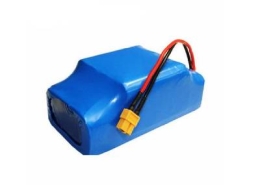
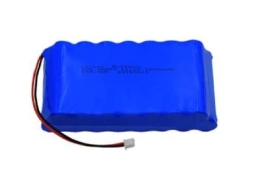
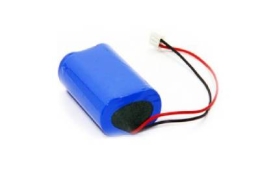
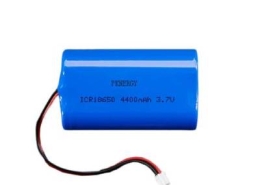
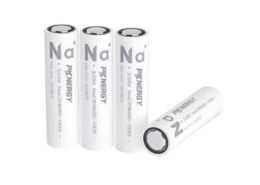
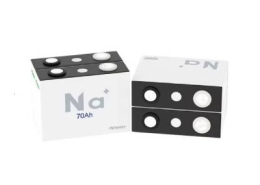
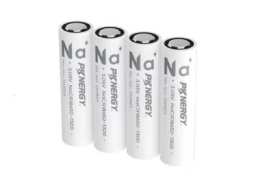
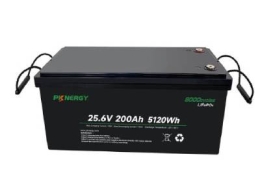
Lithium-Ion Battery Cells
If you have any questions, please contact us in time.


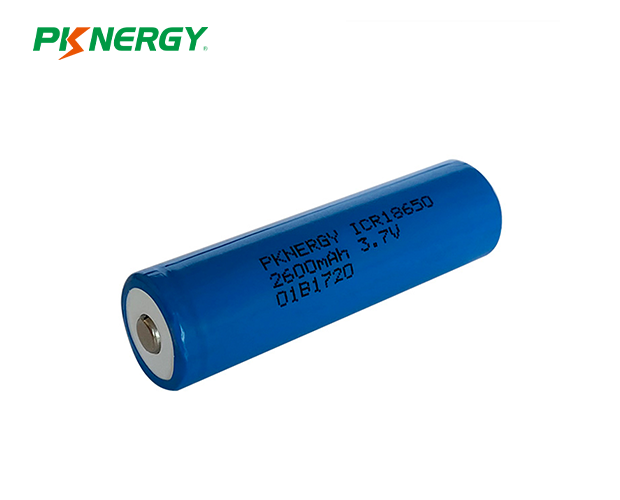
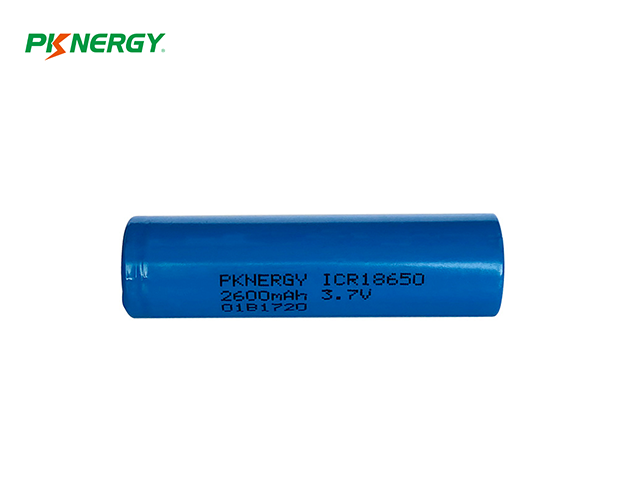
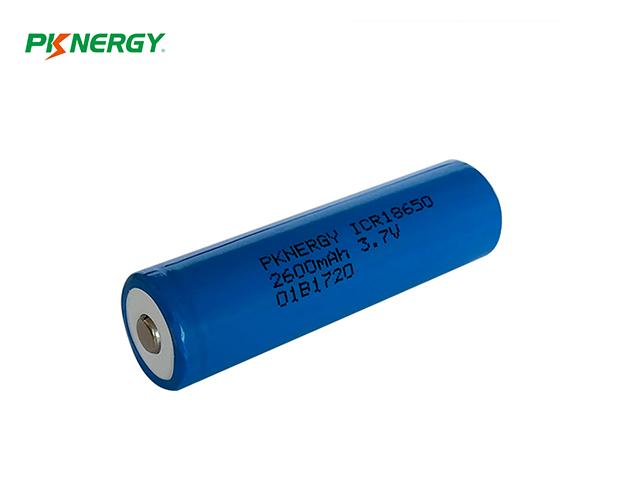
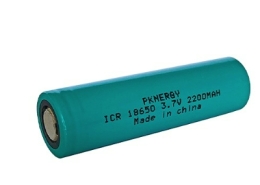
INR21799 5000mAh 3.7V
✔ High Energy Density
– 5000mAh+ capacity for longer runtime, reducing replacements.
✔ Long Cycle Life
– 1000+ charge cycles, ensuring durability.
✔ Stable High Discharge Rate
– Consistent power output for high-performance devices.
✔ Wide Temperature Adaptability
– Works reliably from -20℃ to 60℃.
✔ Advanced Safety Protection – Intelligent BMS prevents overcharging & short circuits.
Custom voltage, capacity & BMS solutions available.
Contact us today for a tailored battery solution!
| No. | Item | Characteristics | Remarks |
|---|---|---|---|
| 1 | Nominal Capacity | Minimum: 4850mAh Typical: 5000mAh |
Standard discharge (0.2C) after Standard charge |
| 2 | Nominal Voltage | 3.7V | — |
| 3 | Charging Cut-off Voltage | 4.2V | — |
| 4 | Discharge Cut-off Voltage | 2.5V | — |
| 5 | Standard Charge | Constant Current 0.2C | Charge Time: Approx 6.5h |
| Constant Voltage 4.2V | |||
| 0.01C cut-off | |||
| 6 | Maximum Constant Charging Current | 5A | — |
| 7 | Standard Discharge | Discharge at 0.2C to 2.5V | — |
| 8 | Maximum Continuous Discharging Current | 15A | — |
| 9 | Operating Temperature | Charge: 0-45℃ Discharge: -20-60℃ |
— |
| 10 | Storage Temperature | -20~45℃ for 1 Month -10~35℃ for 6 Months |
— |
| 11 | Storage Voltage | 3.6-3.85V | — |
| 12 | Environmental Request | RoHS | If the product and packaging meet RoHS standards, a RoHS ID will be on the box. |
Electrochemical performance characteristics
| No. | Item | Testing Method | Requirements |
| 1 | Fully Charged
State |
CCCV or Constant charge to 4.2V @0.2C followed by a constant voltage holding at 4.2V until current drops below 0.01C. | — |
| 2 | Rated Capacity | 0.2C CCCV/Constant charge to 4.2V at room temp. (20±5℃), rest 1-2 hrs, then discharge at 0.2C to 3.0V. Testing will be terminated by either 5 cycles or any discharge time exceeding 285min. | ≥4850mAh |
| 3 | Cycle Life
@25℃ |
Discharge to 3.0V @0.2C, then 0.2C CCCV 0.01C charge to 4.2V, rest for 10 min, discharge at 0.2C to 3.0V, and rest for 10 min. Continue the charge/discharge cycles until discharge capacity is below 80%. | Cycle life ≥300 |
| 4 | Internal Impedance | Internal impedance is measured on a 50% charged battery at 1KHz AC at ambient temperature(20±2)℃ | — |
| 5 | Capacity Retention | Fully charge cells as per 5.1.1, store at (20±2)℃ for 28 days, then discharge to 3.0V at 0.2C, store at (20±2)℃ for 28 days, and discharge to 3.0V. | Discharge Capacity≥4000mAh |
| 6 | High Temperature Characteristics | Fully charge cells per 5.1.1, store them at (55±2)℃ for 2 hours, then discharge to 3.0V at 0.2C. | Discharge Capacity≥4000mAh |
| 7 | Low Temperature Characteristics | Fully charge cells per 5.1.1, store them at (-10±2)℃ for 16~24 hours, then discharge to 3.0V at 0.2C. | Discharge Capacity≥3000mAh |
| 8 | Cell Voltage during Transportation | Check open circuit voltage (OCV) of cells prior to delivery to customers. | ≥3.6V |
– Warranty
Warranty period for this product is 1 year starting from the date when the products left the door of manufacturer.
– Liability
The user has to operate the products according to the instructions printed on the battery label or follow the advices described in this “Product Specification for Lithium Ion Batteries published by shenzhen pknergy energy Co., Limited. In case the battery were overheated or even catch fire or explosion caused by mishandling of the user side, shenzhen pknergy energy Co., Limited. will not be liable for the lose caused by any of such mishandling. shenzhen pknergy energy Co., Limited. will notify the users in written form if any modifications in specification, raw material, production process control.
– Battery Packing Label
The following warnings should be indicated on the battery pack labels.
– Warnings and Cautions in Handling the Lithium-ion Battery
To prevent potential leaking, overheating or explosion of batteries please be advised to take following precautions:


Lorem ipsum dolor sit amet
What lithium polymer batteries can PKNERGY make?
We can make regular 3.7V, 7.4V, 11.1V, 30mah~10000mah lithium polymer batteries. We also have rich experience in making ultra-thin and special lithium polymer batteries.
What are the advantages of lithium polymer batteries?
Lithium polymer batteries have the advantages of high energy density, light weight and small size. They can be designed into various shapes, suitable for a variety of applications, and have high safety, reducing the risk of leakage and explosion.
What is the shelf life of lithium polymer?
The shelf life of lithium polymer batteries is usually 2 to 3 years, depending on storage and use conditions.
How to store lithium polymer batteries?
Lithium polymer batteries should be stored in a cool, dry place, avoid high temperatures and direct sunlight, the most suitable storage temperature is around 15°C, and keep the power between 40%-60% to extend the service life.

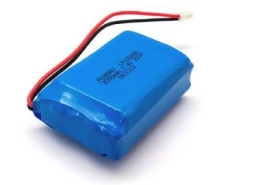
 Pknergy 103450 3.7V 2000mAh Li-Polymer Battery with PCM