
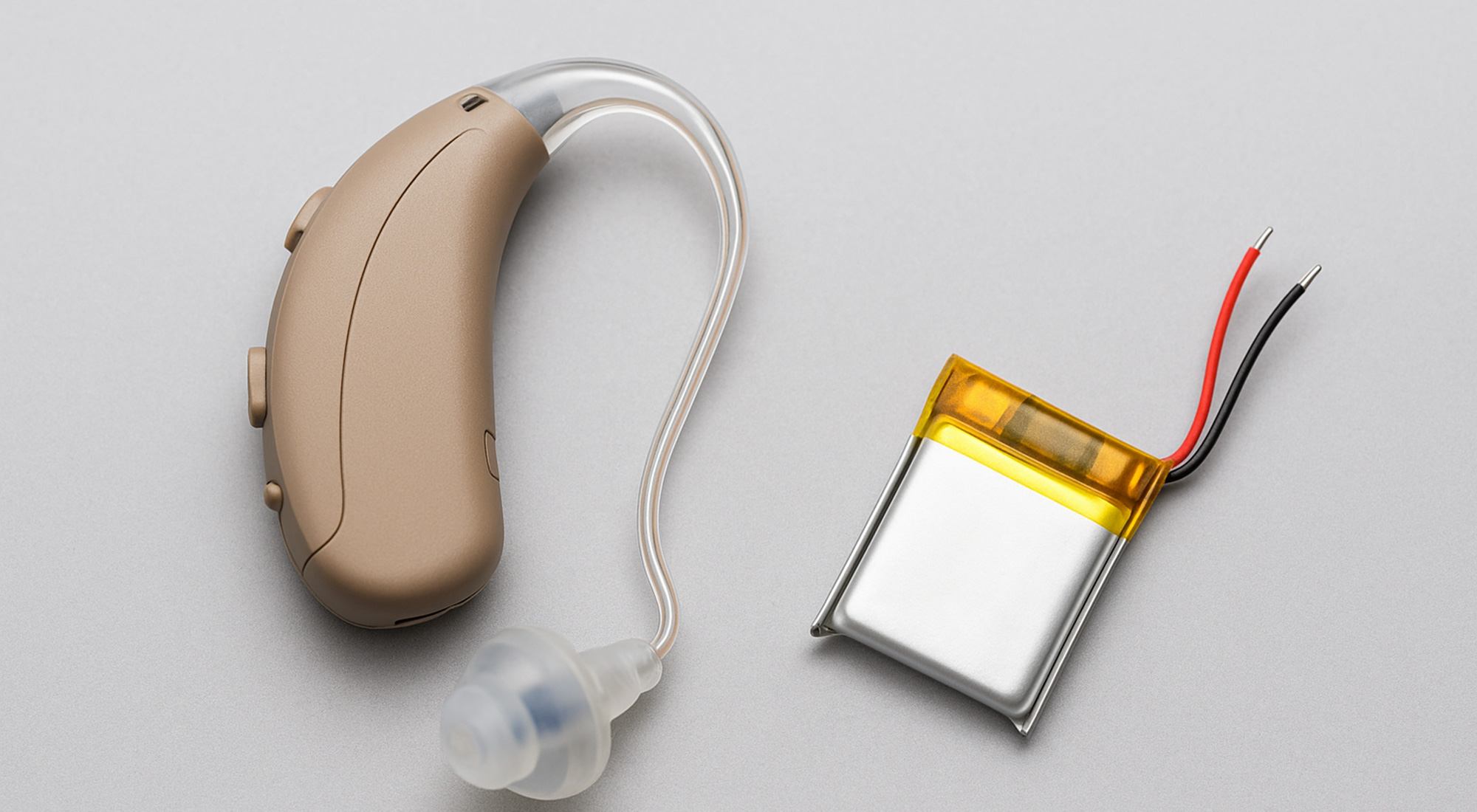
The Evolution of Hearing Aid Batteries: From Disposable to Rechargeable
How rechargeable lithium batteries are reshaping modern hearing aid design
Medical Device Battery
Battery Requirements for Hearing Aids
Hearing aids are among the most challenging medical electronic devices to design. They must integrate a microphone,
DSP chip, amplifier, Bluetooth module, and speaker into an ultra-compact housing, while delivering stable, all-day performance.
- Miniaturization: Ultra-thin batteries for in-ear or behind-the-ear designs
- Lightweight: Comfortable for 12+ hours of daily wear
- Long battery life: All-day operation on a single charge
- Stable voltage: Consistent sound quality and wireless performance
- Safety & sustainability: Skin-contact safety and eco-friendly design
From Zinc-Air to Rechargeable Batteries
For decades, zinc-air disposable batteries dominated the hearing aid market. While compact and energy-dense, they present several limitations:
- Short lifespan with frequent replacements
- Performance affected by humidity
- High long-term operating costs
- Environmental impact due to non-recyclable waste
As modern hearing aids adopted Bluetooth connectivity, wireless streaming, and AI-based audio processing, power consumption increased significantly.
This accelerated the industry’s transition toward rechargeable lithium polymer batteries.
What Makes Hearing Aid Batteries Different?
1. Ultra-Small Size & Custom Shapes
- Thickness: 2–4 mm
- Capacity: 15–50 mAh, customized per device
2. Stable Voltage & Safety Electronics
- Nominal voltage: 3.7 V (2.8–4.2 V range)
- Protection against over-charge, over-discharge, short-circuit, and overheating
3. Sealed Packaging
- Lightweight aluminum-plastic pouch structure
- Resistant to moisture, sweat, and earwax
4. Integrated Charging Systems
- Contact or wireless inductive charging
- Battery, BMS, and charging dock designed as a complete system
PKNERGY Custom Hearing Aid Battery Solutions
PKNERGY specializes in high-performance, miniaturized rechargeable batteries for medical and wearable devices.
Our hearing aid battery solutions include:
- Ultra-thin Li-poly pouch cells (as thin as 2 mm)
- Custom capacities from 10–50 mAh
- Integrated protection circuits for safe daily cycling
- Customized terminals and packaging
- System-level integration: battery + BMS + charging solution
- Global compliance: UN38.3, IEC 62133
These solutions are ideal for medical device power solutions
and advanced wearable electronics.
Partner With PKNERGY
The hearing aid industry is rapidly shifting from disposable zinc-air batteries to rechargeable lithium technology.
Choosing the right battery partner directly impacts product reliability, user experience, and market competitiveness.
We work with hearing aid manufacturers, medical electronics developers, and wearable technology companies worldwide.
Contact Cassie — PKNERGY
Looking for a custom rechargeable hearing aid battery solution?
Contact us to discuss your project requirements.
- Email: sale4@pknergy.com
- Website: www.pknergybattery.com
Frequently Asked Questions
Are rechargeable hearing aid batteries safe?
Yes. Medical-grade lithium polymer batteries use multiple protection mechanisms and sealed packaging for safe daily use.
How long do rechargeable hearing aid batteries last?
Typically 3–5 years, depending on charging habits and usage patterns.
Can PKNERGY customize battery size and shape?
Yes. PKNERGY provides fully customized battery dimensions, capacity, and connectors for hearing aid designs.