
info@pknergybattery.com
Lithium-ion batteries are at the core of today’s portable and renewable energy technologies. But what exactly is a lithium-ion battery—and how do different types and chemistries affect performance?
In this guide, we’ll break down what a Lithium batteries is, explore its internal components, and explain the most common lithium-ion chemistries used across industries such as electric vehicles, solar storage, and medical devices. Whether you’re selecting cells for a new project or evaluating battery options for mass production, understanding lithium-ion battery types and chemistry is key to making informed decisions.
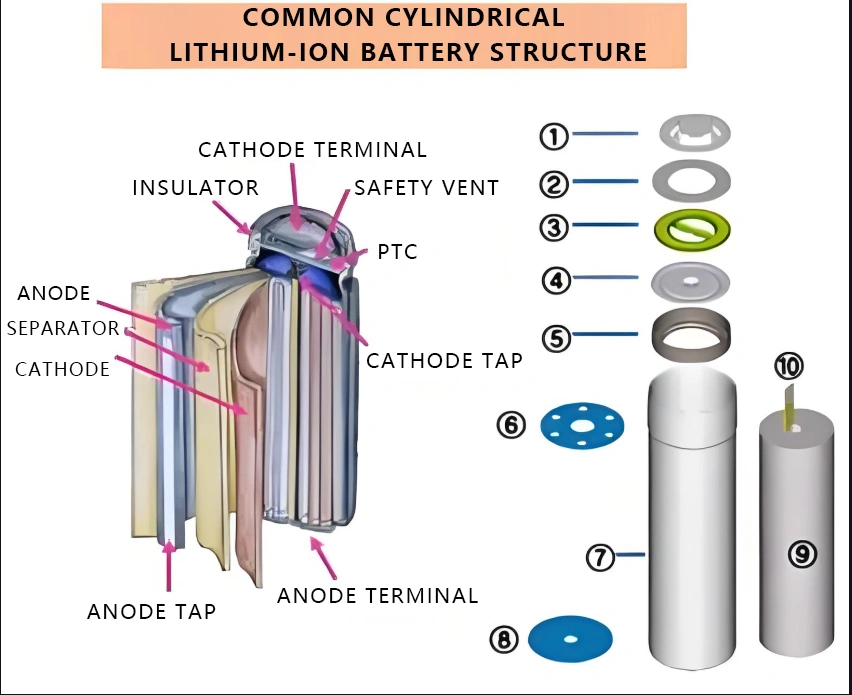
What Is the Makeup of a Lithium-ion Battery?
A lithium-ion battery typically consists of four main components:
- Anode (Negative Electrode): Usually made of graphite.
- Cathode (Positive Electrode): Made from lithium metal oxides like LiCoO₂, LiFePO₄, or NMC.
- Electrolyte: A lithium salt (e.g., LiPF₆) dissolved in an organic solvent that enables ion flow.
- Separator: A microporous film that prevents the anode and cathode from contacting while allowing lithium ions to pass through.
When the battery discharges, lithium ions flow from the anode to the cathode through the electrolyte, generating electricity.
What Is the Material Composition of a Lithium-ion Battery?
The performance and safety of a lithium-ion battery depend heavily on the materials used. Here’s a simplified breakdown:
| Component | Common Materials | Function |
|---|---|---|
| Cathode | LiCoO₂, NMC, NCA, LiFePO₄, LMO | Determines capacity, voltage, lifespan |
| Anode | Graphite, Lithium titanate (LTO) | Stores and releases lithium ions |
| Electrolyte | LiPF₆ + organic solvents | Conducts lithium ions |
| Separator | Polyethylene or polypropylene film | Prevents internal short circuits |
What Is the Most Common Lithium-ion Battery Chemistry?
The most widely used lithium-ion chemistries today include:
- NMC (Lithium Nickel Manganese Cobalt Oxide):
Balanced energy density, power, and safety. Common in EVs and energy storage.
- LFP (Lithium Iron Phosphate):
Excellent safety and long cycle life. Ideal for solar energy systems and commercial storage.
- NCA (Nickel Cobalt Aluminum Oxide):
High energy density, often used by Tesla.
- LCO (Lithium Cobalt Oxide):
High energy density, but less stable—used mainly in electronics.
Each chemistry offers unique benefits depending on use-case priorities such as energy density, lifespan, safety, or cost.
How to Distinguish Between Different Lithium-ion Battery Types?
When choosing or evaluating a lithium-ion battery, consider:
- Application Scenario: EVs favor NMC/NCA; solar favors LFP.
- Energy vs. Power Needs: LCO has high energy; LFP offers more power and thermal stability.
- Form Factor: Cylindrical (e.g., 18650, 21700), pouch, or prismatic types often indicate the battery type.
- Labeling and Datasheets: Most lithium batteries are marked with their chemistry or model series.
If you’re unsure, consult PKNERGY — our experts can match battery specs to your product needs.
Conclusion – Understanding Lithium-ion Batteries Helps You Choose Better
Knowing what’s inside a lithium-ion battery—and how different chemistries perform—empowers engineers, buyers, and OEMs to make smarter sourcing decisions. Whether you’re looking for a safe solution for consumer electronics or a high-performance pack for an industrial device, understanding lithium-ion battery makeup is the first step.
Need help choosing the right battery? [Contact PKNERGY] for expert custom lithium-ion battery solutions.

RELIABLE · ROBUST · POWERFUL
Copyright © 2026 Shenzhen Pknergy Energy Co Ltd . All Rights Reserved | Privacy Policy | Terms & Conditions | Cookie Policy