
info@pknergybattery.com
Intro:
What’s the Difference Between Lithium-ion and Lithium Polymer?
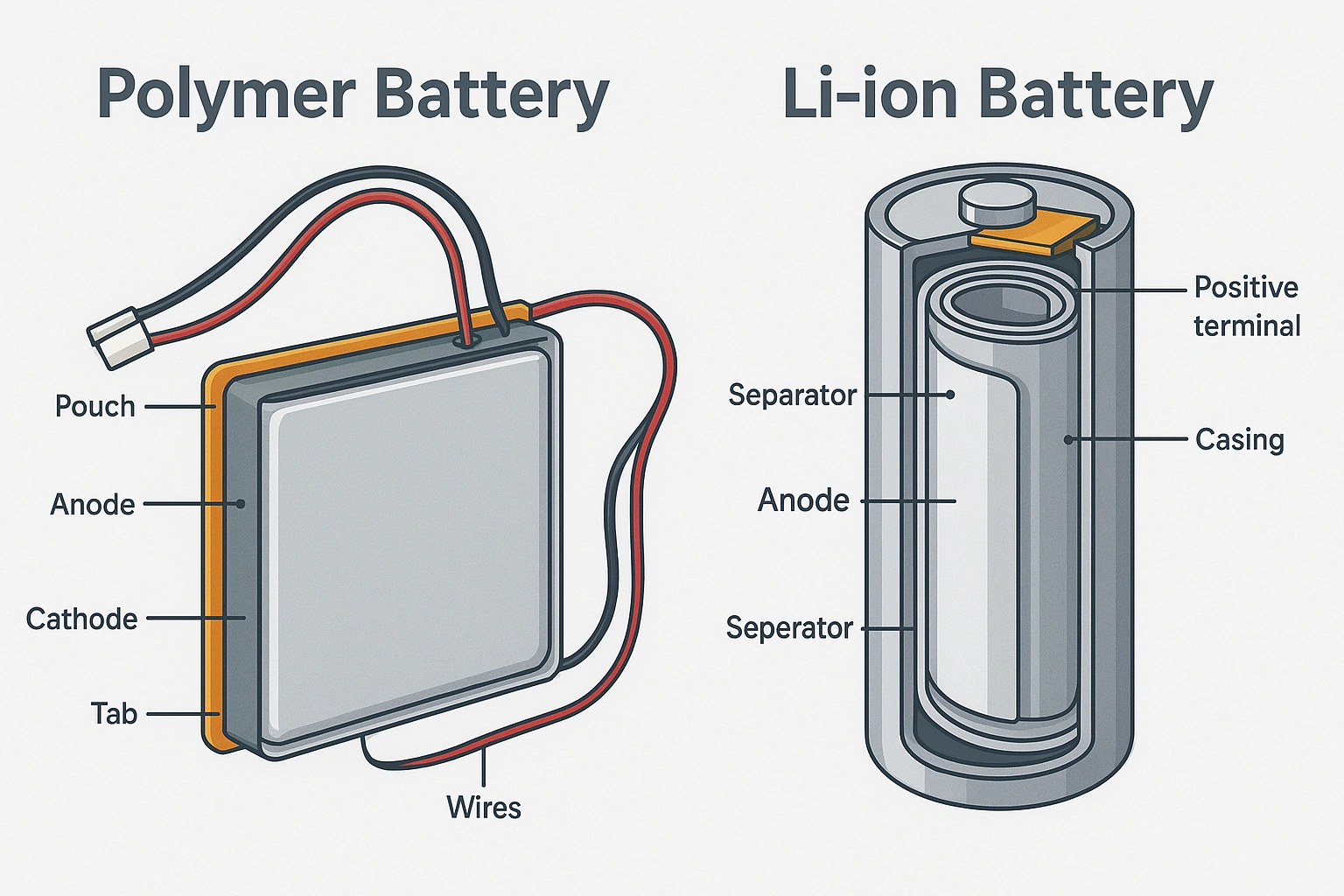
Lithium-ion (Li-ion) batteries and lithium polymer (LiPo) batteriesare the two most commonly used rechargeable battery types in modern devices. While both rely on lithium-based chemistry, they differ in structure, form factor, performance characteristics, and safety profiles. This guide offers a clear comparison to help engineers, product designers, and technical buyers make informed decisions when selecting between the two.
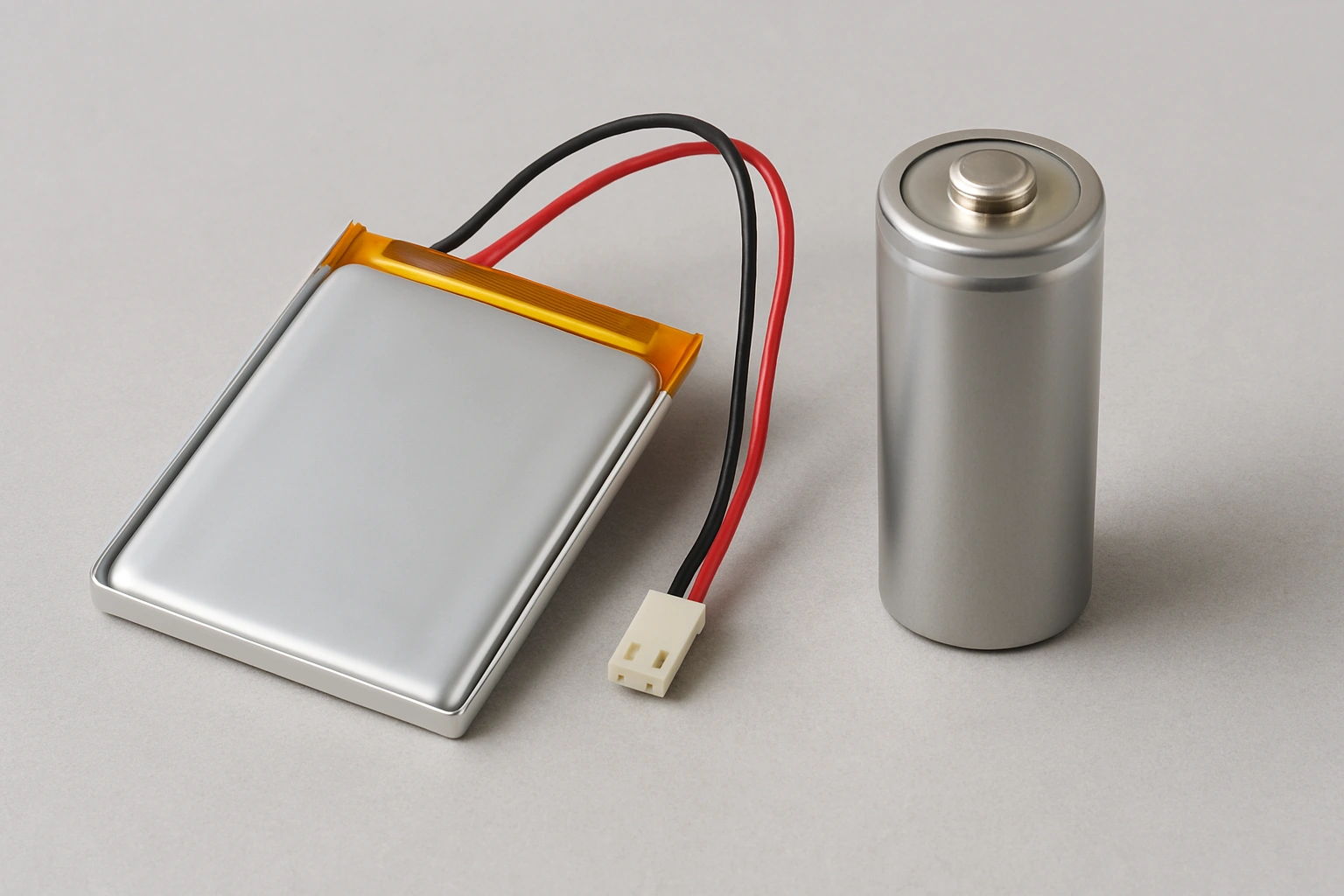
Five Key Advantages of Lithium Polymer Batteries
1. Flexible Shape and Size
LiPo batteries use pouch cells, making them easy to customize for thin, curved, or compact devices.
2. Lightweight Structure
Without metal casing, they offer a better energy-to-weight ratio for portable products.
3. Improved Safety Under Stress
Pouch cells are less likely to rupture violently under pressure compared to rigid cells.
4. Low Profile Design
Ideal for wearables, medical patches, or ultra-thin electronics.
5. Low Self-Discharge Rate
Good storage stability under proper handling conditions.
Disadvantages of Lithium Polymer Batteries
Despite their design flexibility, LiPo batteries also have some limitations:
-
Higher cost due to customization and lower production volume
-
Shorter cycle life (typically 300–800 cycles under standard conditions)
-
More sensitive to overcharging or deep discharge
-
Pouch cell vulnerability to mechanical damage if not protected in a rigid housing
For high-power or long-cycle applications, traditional Li-ion cells may still be preferred.
Application Examples of Lithium Polymer Batteries
LiPo batteries are commonly used in:
-
Consumer electronics: Bluetooth headsets, fitness trackers, tablets
-
Medical devices: Hearing aids, diagnostic tools, smart patches
-
RC and drones: Lightweight power with high output
-
IoT devices: Compact sensors, GPS trackers
-
Portable beauty equipment: Where size and shape flexibility is key
Which Is Better – Lithium-ion or Lithium Polymer?
The answer depends on your product’s design requirements:
| Feature | Lithium-ion | Lithium Polymer |
|---|---|---|
| Shape | Cylindrical or prismatic | Flexible pouch |
| Energy density | Slightly higher | Slightly lower |
| Cost | Lower | Higher |
| Mechanical safety | Moderate (rigid shell) | Better under impact (soft pouch) |
| Applications | Power tools, EVs | Drones, wearables, medical devices |
For high-volume, power-intensive devices, Li-ion is often preferred. For space-constrained or lightweight designs, LiPo offers greater flexibility.
Do Lithium Polymer Batteries Leak or Swell?
Under normal use, LiPo batteries do not leak, since they contain no liquid electrolyte.
However, swelling can occur due to:
-
Overcharging or over-discharging
-
Exposure to high temperatures
-
Internal damage or cell aging
To minimize this, always use batteries with integrated protection circuits and follow proper charging guidelines.
Are Lithium Polymer Batteries Dangerous or Flammable?
All lithium-based batteries carry some degree of fire risk, particularly under abuse. LiPo batteries are structurally safer than traditional Li-ion cells in some cases, but they still require:
-
Proper charging voltages
-
Short-circuit protection
-
Mechanical shielding in final devices
Misuse or manufacturing defects can still lead to thermal events, so safety certification and quality control are critical.
How to Maximize the Safety and Lifespan of LiPo Batteries
To ensure safe and reliable operation:
-
Use a smart BMS or PCM with overcharge/discharge and temperature protection
-
Avoid deep discharging below 3.0V
-
Store at ~40% charge when not in use
-
Avoid charging in extreme heat or cold
-
Choose reliable suppliers with certified testing and traceable quality control, just like PKNERGY, where we ensure every product meets the highest standards for quality and performance.
Conclusion:
Choosing Based on Application Demands
Lithium-ion and lithium polymer batteries each have their strengths. While Li-ion is widely used for high-density, cost-sensitive applications, LiPo stands out in devices requiring shape customization, weight reduction, and compact design. Understanding the pros and cons of each technology helps ensure your power solution aligns with your product’s performance and form factor goals.
For custom solutions involving either battery type, PKNERGY supports OEM clients with tailored designs based on project-specific needs.

RELIABLE · ROBUST · POWERFUL
Copyright © 2026 Shenzhen Pknergy Energy Co Ltd . All Rights Reserved | Privacy Policy | Terms & Conditions | Cookie Policy