
info@pknergybattery.com
Applications
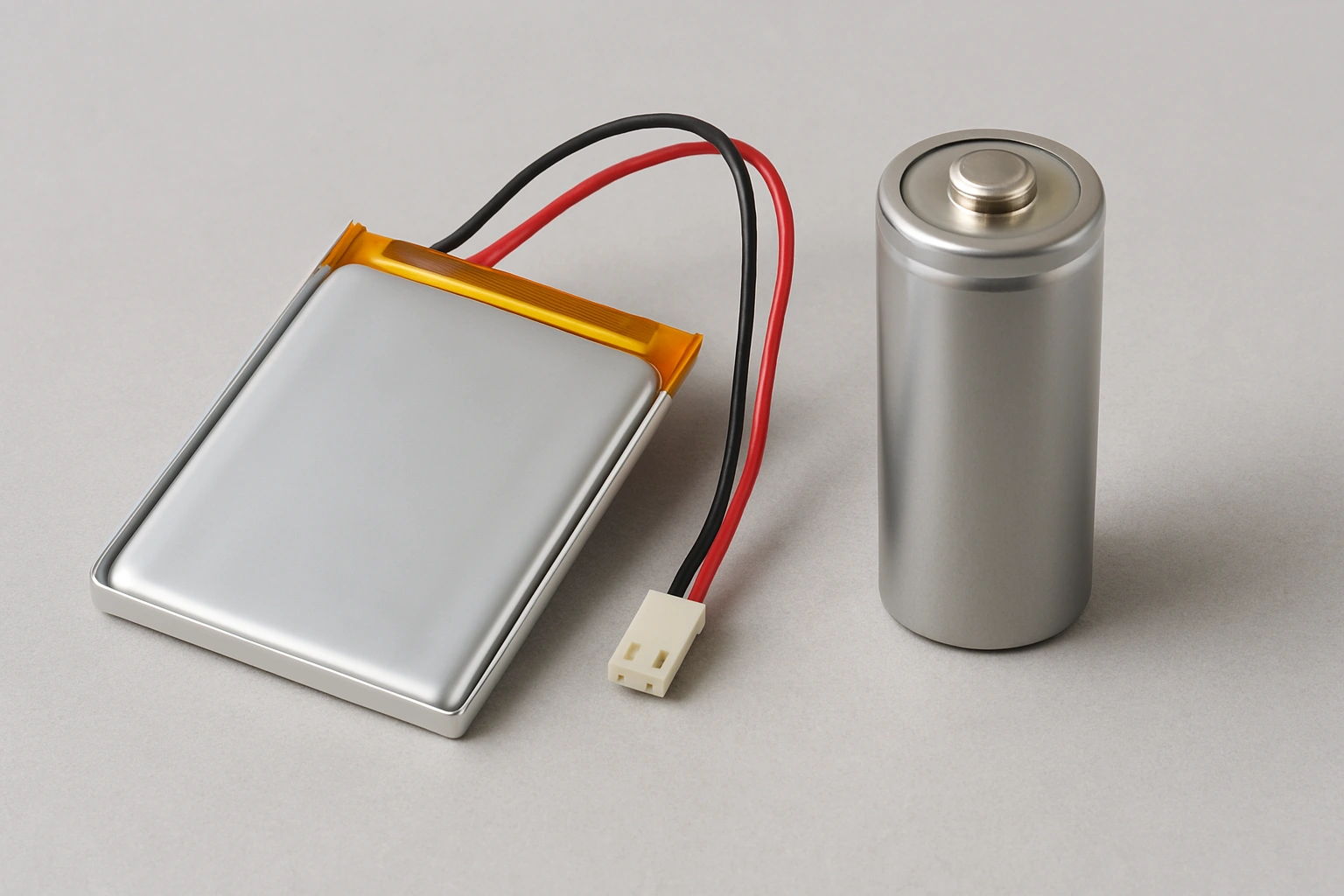
Lithium-ion polymer batteries—often referred to as LiPo batteries—are a type of rechargeable lithium battery that uses a polymer electrolyte instead of a liquid one. Known for their thin profile, lightweight, and flexible design, they are widely used in modern electronics, wearables, drones, and custom-engineered products. For manufacturers, choosing a lithium-ion polymer battery can mean better energy density and design freedom compared to traditional cylindrical lithium-ion cells.
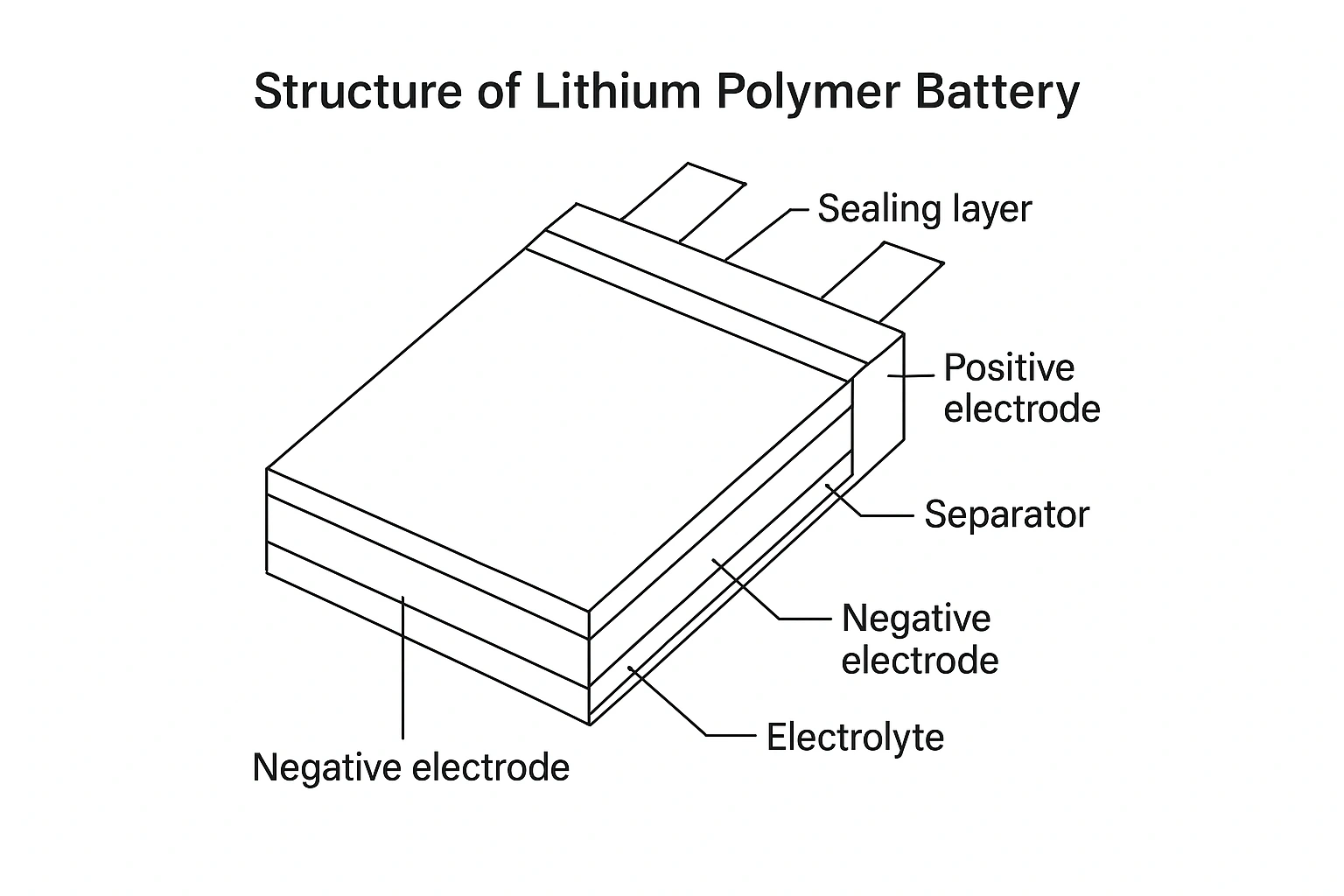
Structure of a Lithium Polymer Battery
A LiPo battery typically consists of the following layers:
Cathode (positive electrode): Usually made of lithium cobalt oxide (LiCoO₂) or lithium manganese oxide (LMO)
Anode (negative electrode): Typically graphite
Polymer-based electrolyte: Often a gel-like material for ion transfer
Separator: Microporous film to prevent short circuits
Flexible pouch casing: Instead of rigid cylindrical housing, the battery is sealed in aluminum laminated film
This structure allows manufacturers to shape batteries according to device dimensions, making them ideal for compact, space-limited applications.
How Does a Lithium Ion Polymer Battery Work?
Just like conventional lithium-ion batteries, LiPo batteries work through the movement of lithium ions between the anode and cathode during charging and discharging cycles.
The polymer electrolyte facilitates this ion flow and also improves safety and form factor flexibility. The result is a battery that’s not only compact but also efficient and stable under proper use conditions.
What Is the Lifespan of a LiPo Battery?
Most lithium polymer batteries have a lifespan of 300 to 1000 cycles, depending on:
Depth of discharge (DoD)
Charging rate and method
Operating temperature
Quality of internal protection circuits (PCM/BMS)
For commercial applications, choosing a high-quality custom lithium polymer battery with proper design and protection can significantly extend service life.
Common Sizes and Shapes of LiPo Batteries
LiPo batteries come in highly flexible sizes, including ultra-thin, curved, or micro-sized forms for:
- Medical devices
- IoT sensors
- Wearables
- GPS trackers
- Consumer electronics
We offer custom lithium polymer batteries as thin as 0.5mm or in unique shapes tailored to your design. Explore our polymer battery range for reference or request a custom specification.
Are Lithium Polymer Batteries Better Than Lithium-Ion?
It depends on the application. Here’s a quick comparison:
| Feature | Lithium-Ion | Lithium Polymer |
|---|---|---|
| Shape flexibility | Rigid (cylindrical) | Flexible (pouch) |
| Energy density | Higher (typically) | Slightly lower |
| Safety | Moderate | Better structural safety |
| Cost | Lower | Higher (custom-ready) |
| Applications | Power tools, EVs | Slim electronics, drones |
Conclusion:
Lithium-ion polymer batteries offer design flexibility, lightweight structure, and compatibility with a wide range of compact devices. Their unique characteristics make them a suitable choice for applications such as smart wearables, medical instruments, and IoT systems.
For projects that require customized battery dimensions or configurations, companies like PKNERGY provide technical support and tailored solutions based on application needs.
Additional Questions Customers Often Ask
Can lithium polymer batteries be custom-shaped?
Yes, that’s one of their biggest advantages. You can design them to fit ultra-thin, curved, or space-limited devices. Request a custom battery design.
Are lithium polymer batteries safe?
Yes—especially when paired with a proper PCM or BMS. Unlike rigid Li-ion cells, the soft pouch structure can tolerate minor impact without immediate rupture. However, overcharging, puncture, or thermal abuse should still be avoided.
What are lithium polymer batteries used for?
Common applications include:
Drones/UAVs
Smart medical devices
POS terminals
Portable beauty tools
Bluetooth accessories
How should LiPo batteries be stored?
Store at 40–60% charge in a cool and dry place. Avoid direct sunlight, freezing temperatures, or a full charge for extended periods.

RELIABLE · ROBUST · POWERFUL
Copyright © 2026 Shenzhen Pknergy Energy Co Ltd . All Rights Reserved | Privacy Policy | Terms & Conditions | Cookie Policy