
info@pknergybattery.com
Custom lithium battery packs are essential for powering a wide variety of devices, from smart electronics to medical equipment, industrial tools, and IoT systems. But to design the right lithium battery pack for your project, we need detailed information from the very beginning.
Here’s a complete guide to the 8 critical items you should provide when requesting a custom lithium battery solution.
1. Country/Region
Different countries have different battery safety certifications, shipping standards, and voltage regulations. Knowing the destination helps us ensure compliance with:
-
UL, UN38.3, CE, IEC standards
-
Regional shipping classifications
-
Local power compatibility
2. Application Scenario
What type of device will the battery power?
Examples include:
-
Smart meters, electronic toys
-
Portable medical equipment
-
Handheld scanners, POS terminals Example: “Used in a CCC-certified toy car” or “for a barcode scanner”
This helps us determine safety level, cycle life needs, and design constraints such as shape or temperature resistance.
3. Required Voltage and Capacity
Please provide:
-
Nominal voltage: e.g. 3.7V, 7.4V, 11.1V
-
Capacity: e.g. 2600mAh, 5200mAh, etc.
Example: 11.1V 2.6Ah (3S1P)
If you’re unsure about capacity but know how long the device should run, we can estimate it for you (see section 5).
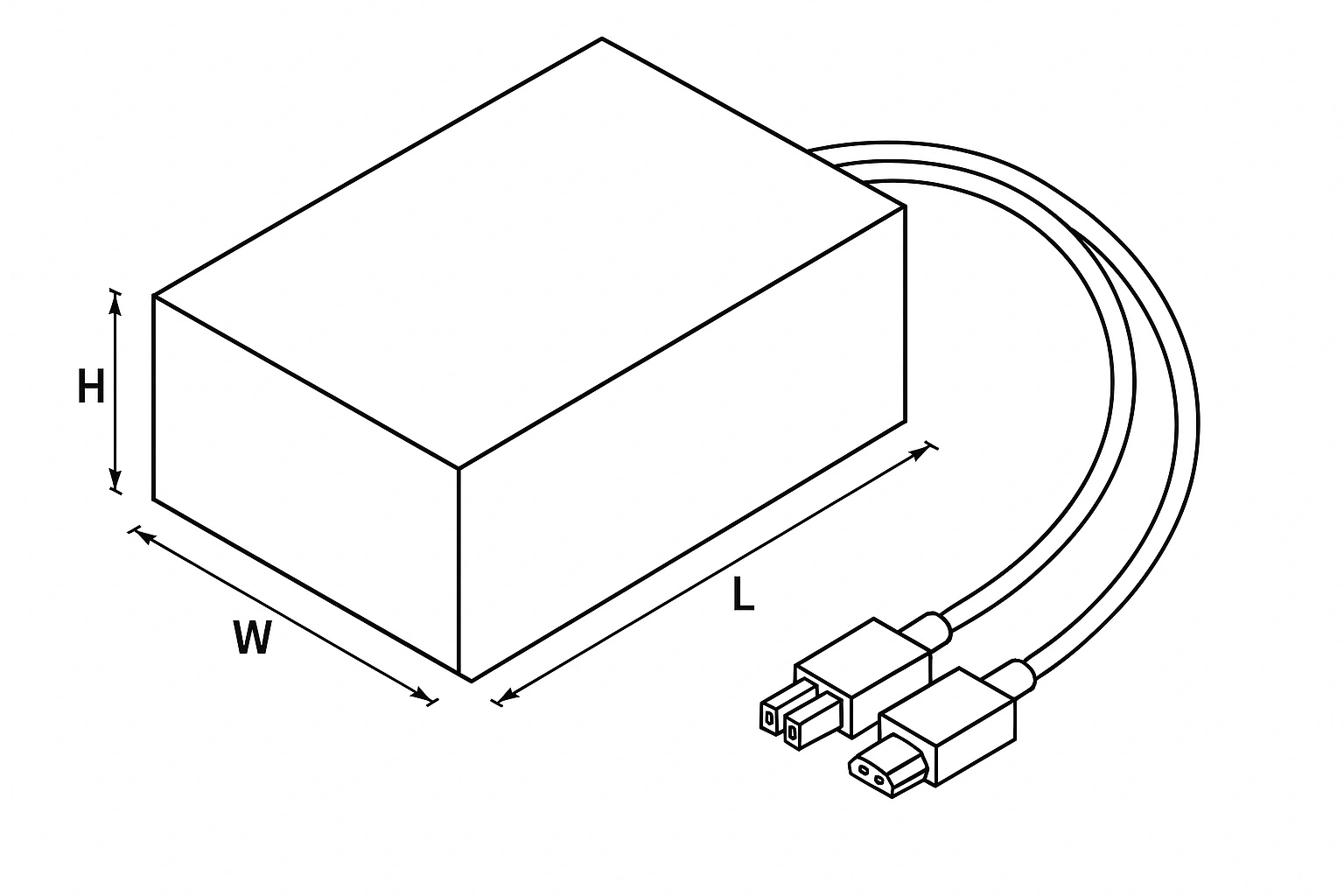
4. Battery Pack Dimensions
Tell us the maximum space available inside your device for the battery. Dimensions should include:
-
Length × Width × Height (mm)
-
Example: 19 × 57.5 × 70 mm
This is crucial for selecting a matching cell size and structure.
5. Load Conditions
Two types of data are helpful:
-
Maximum continuous current: e.g. 3A
-
Estimated runtime: If you know the current but not the capacity, tell us how long the battery should last. We’ll calculate the required capacity for you.
-
Example: “Device uses 2A and needs to run for 3 hours.”
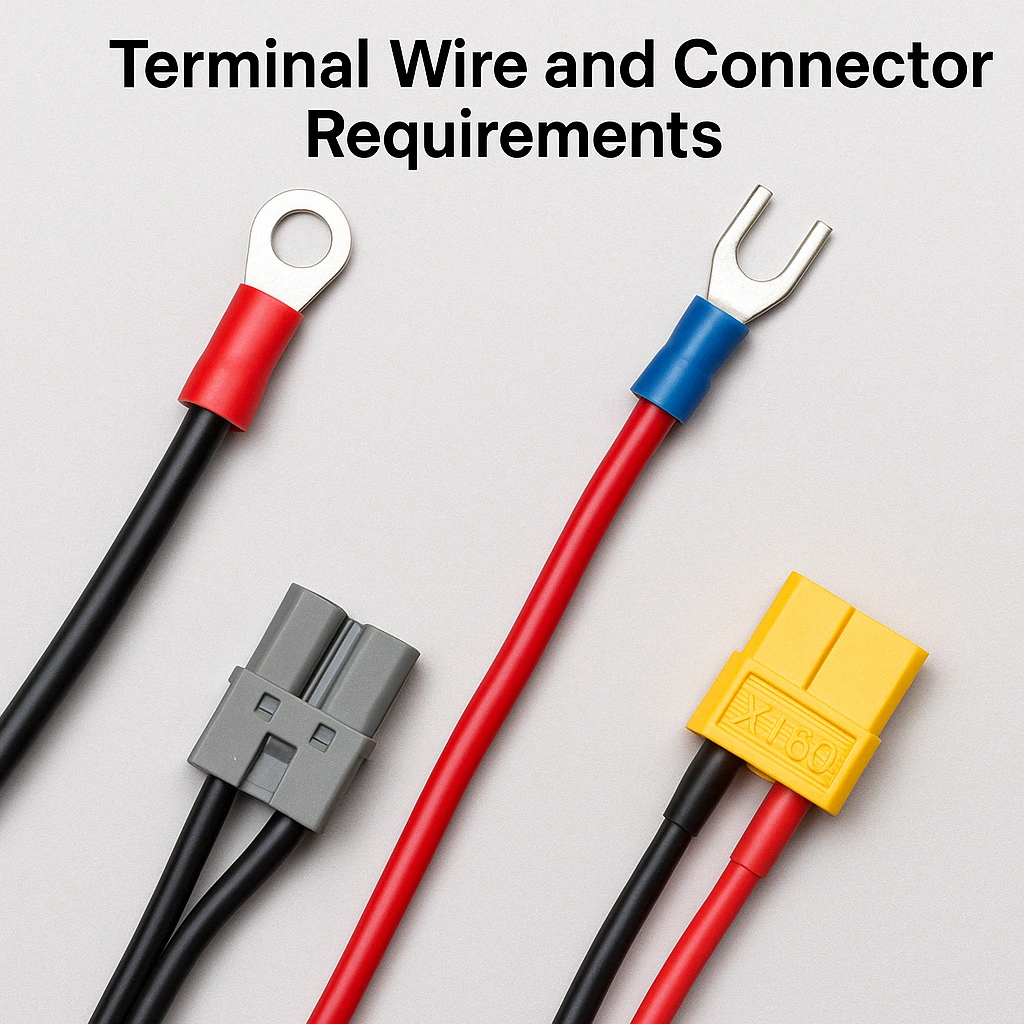
6. Terminal Wire and Connector Requirements
Please specify:
-
Wire type: e.g. UL1007 24#
-
Wire length: e.g. 100mm (± tolerance)
-
Connector type: e.g. PHR-2P, JST, Molex
-
Pin order: If applicable, provide a wiring diagram
Example: “PHR-2P reverse, 3-pin connector with custom wiring sequence”
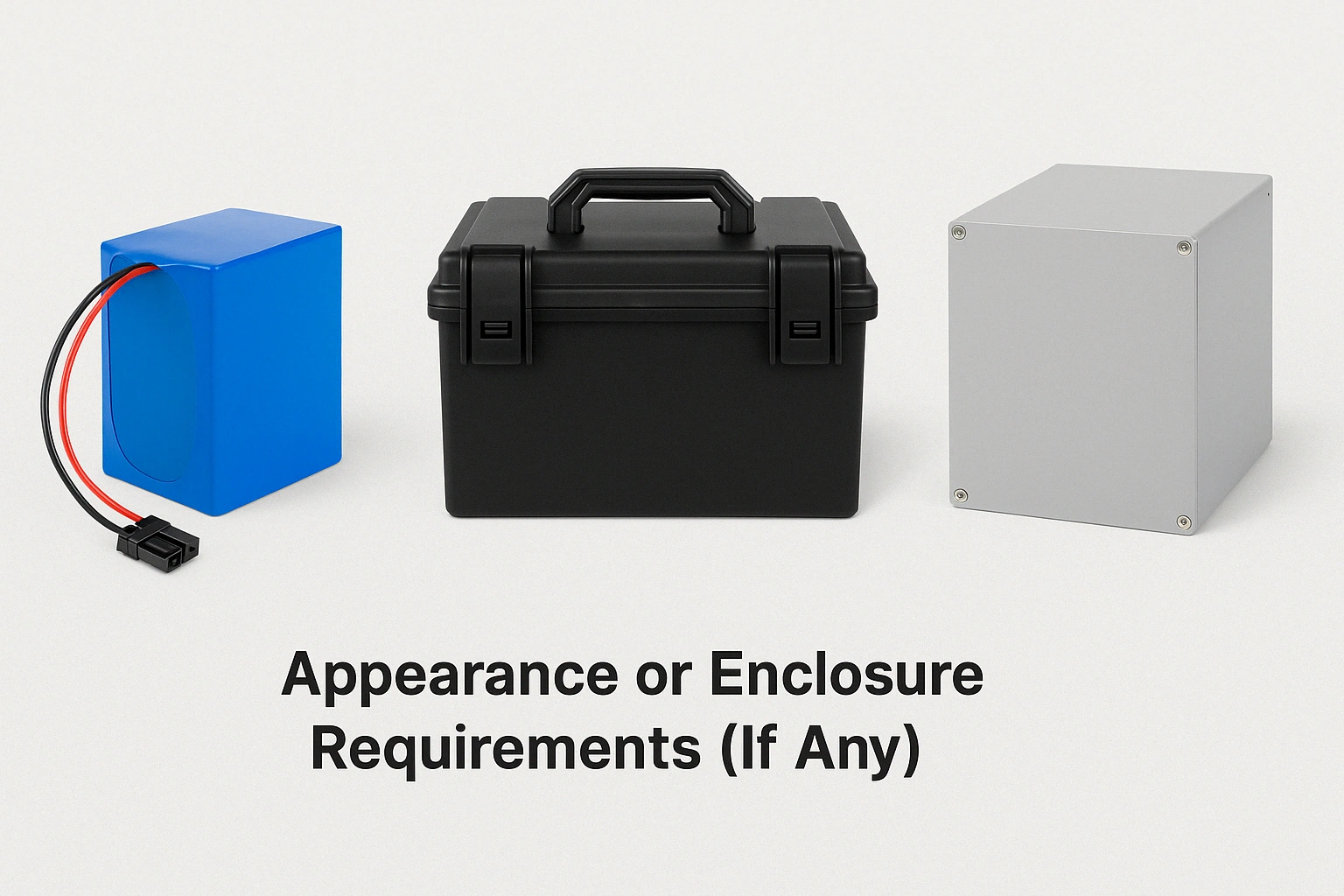
7. Appearance or Enclosure Requirements (If Any)
Let us know if your battery pack needs:
-
A plastic or metal housing
-
Waterproofing (e.g. IP65 level)
-
Special labeling, sticker, or shape
-
Custom mold drawings (PDF or CAD preferred)
This ensures mechanical safety and visual integration into your device.
8. Operating Temperature and Humidity
Please indicate the temperature and humidity your battery will face during:
-
Operation
-
Storage
-
Charging
Example: Working at 0–45°C, storage at -20–60°C, ≤85% RH non-condensing
High or low temperatures may require special cell selection, heating films, or reinforced BMS protection.
Quick Reference: Custom Lithium Battery Checklist
| No. | Information to Provide | Example Input |
|---|---|---|
| 1 | Country / Region | USA / Germany / Japan |
| 2 | Application | Smart lock / Toy / Sensor |
| 3 | Voltage & Capacity | 11.1V 2600mAh |
| 4 | Pack Dimensions | 19 × 57.5 × 70 mm |
| 5 | Load Current or Runtime | 3A max / 2A for 3 hours |
| 6 | Wire & Connector Specs | UL1007 24#, 100mm, PHR-2P |
| 7 | Enclosure / Waterproofing | PVC shrink + IP65 |
| 8 | Temperature & Humidity Range | 0–45°C, <85% RH |
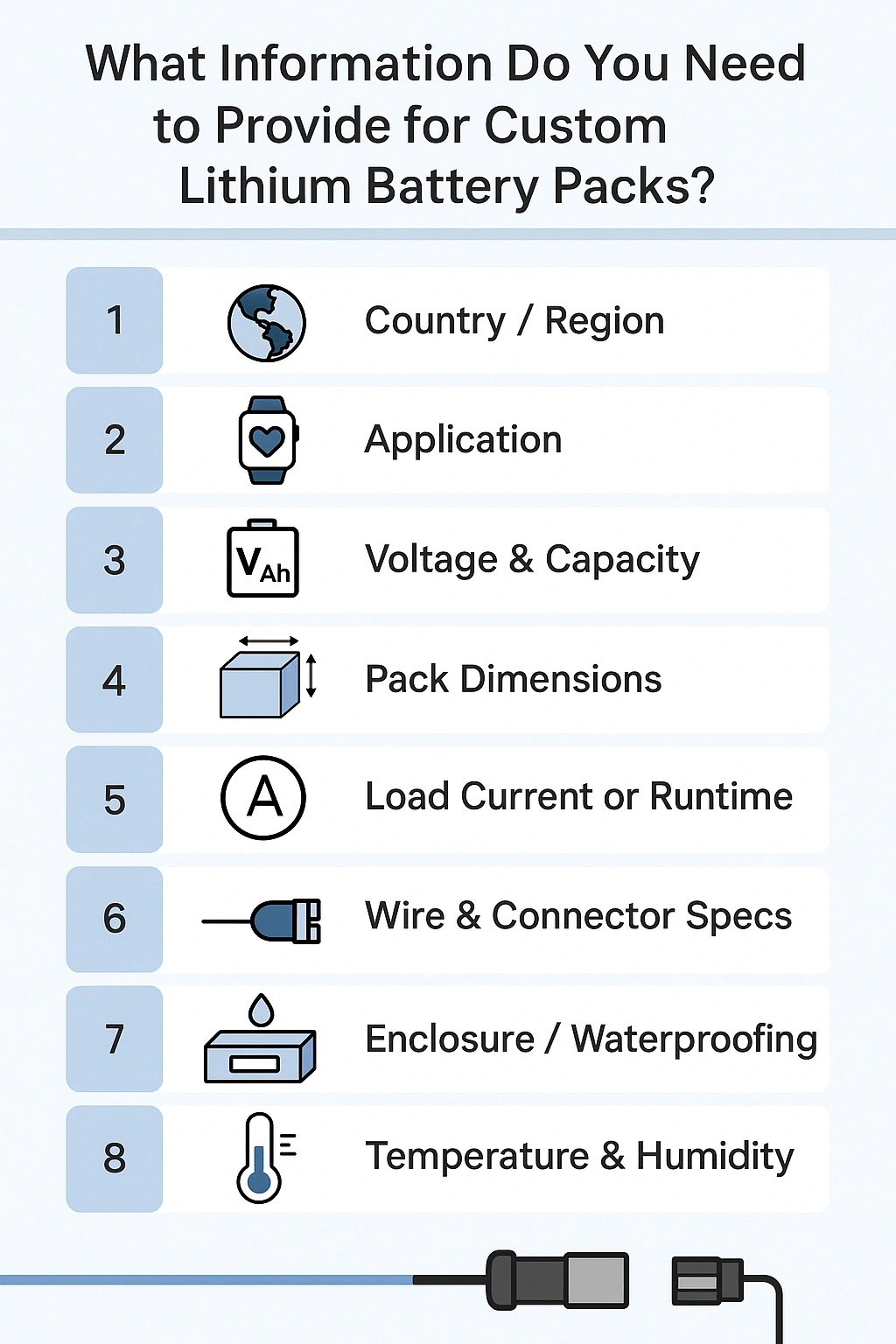
Conclusion: The More You Provide, the Better the Design
The more accurate and detailed your information, the more precise and efficient our design will be. Whether you’re prototyping a new IoT device or upgrading your power system, having a complete requirement list helps us recommend the most suitable cell chemistry, protection circuit, and pack structure.
Ready to start your lithium battery customization project?
Contact our engineering team now—we’ll help you design the right pack from cell to connector.

RELIABLE · ROBUST · POWERFUL
Copyright © 2026 Shenzhen Pknergy Energy Co Ltd . All Rights Reserved | Privacy Policy | Terms & Conditions | Cookie Policy