
Aerial Mapping
High energy density and stable, long-endurance output
for multirotor and fixed‑wing platforms
High-performance custom batteries for agricultural drones, FPV racing drones, mapping, inspection and industrial UAVs.
High energy density and stable, long-endurance output
for multirotor and fixed‑wing platforms
High‑current discharge and powerful output
for demanding, heavy‑payload operations
Enhanced safety and long cycle life
for dependable long‑distance flight
Wide‑temperature performance for all‑weather operation
and mission‑critical reliability
Key technical and quality-control questions for agricultural, mapping, inspection, logistics and industrial drone battery projects.
Battery selection should be based on the drone’s actual operating conditions rather than capacity alone. We normally evaluate the required voltage, continuous current, peak current, target flight time, payload, battery compartment dimensions, connector type, operating temperature and charging method. Motor, ESC and propeller specifications also help confirm whether the battery can safely support takeoff and maximum-load operation.
Voltage must match the drone’s power system and ESC operating range. Capacity affects flight time but also adds weight. The discharge capability must support normal operating current and short current peaks during takeoff, acceleration and heavy-payload flight. It can be estimated using available current = capacity × discharge rate. A suitable safety margin should be included instead of operating continuously at the battery’s maximum rated limit.
Not always. Higher capacity stores more energy, but it normally increases battery weight and may make the motors consume more power. The best result comes from balancing energy density, pack weight, payload, discharge efficiency and installation space. Flight-time targets should therefore be tested under representative payload, temperature and flight-profile conditions.
Cycle life depends on cell chemistry, depth of discharge, current load, operating temperature, charging voltage, storage condition and pack consistency. Frequent deep discharge, overheating, overcharging or long-term storage at full charge can accelerate degradation. A matched charger, balanced cell configuration and suitable protection strategy help maintain more consistent performance throughout the battery’s service life.
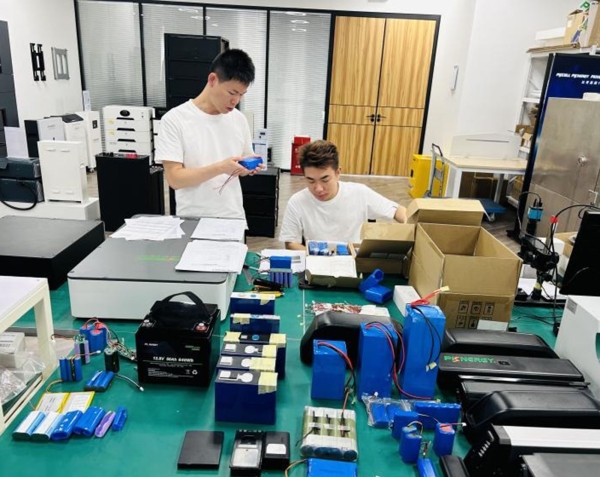
Quality control should cover incoming materials, production processes and finished packs. Depending on project requirements, inspections may include:
Prototype samples can be prepared for installation, charging, discharge and flight verification before mass production. Available documentation depends on the selected cell, pack design and destination market. A project may require UN38.3, MSDS/SDS, transport documents, IEC 62133, CE, RoHS or other compliance materials. These requirements should be confirmed early because changing the cell, protection circuit, enclosure or configuration may affect certification scope.
Send us your voltage, current, flight-time, payload, size and connector requirements for an initial battery solution review.