UAV BATTERY SELECTION GUIDE
A Technical Guide to Battery Chemistry, Capacity Calculation, Discharge Rates, and Performance Validation for UAV Systems.

A Technical Guide to Battery Chemistry, Capacity Calculation, Discharge Rates, and Performance Validation for UAV Systems.
UAV BATTERY KNOWLEDGE / 01
What battery is best suited to your UAV?
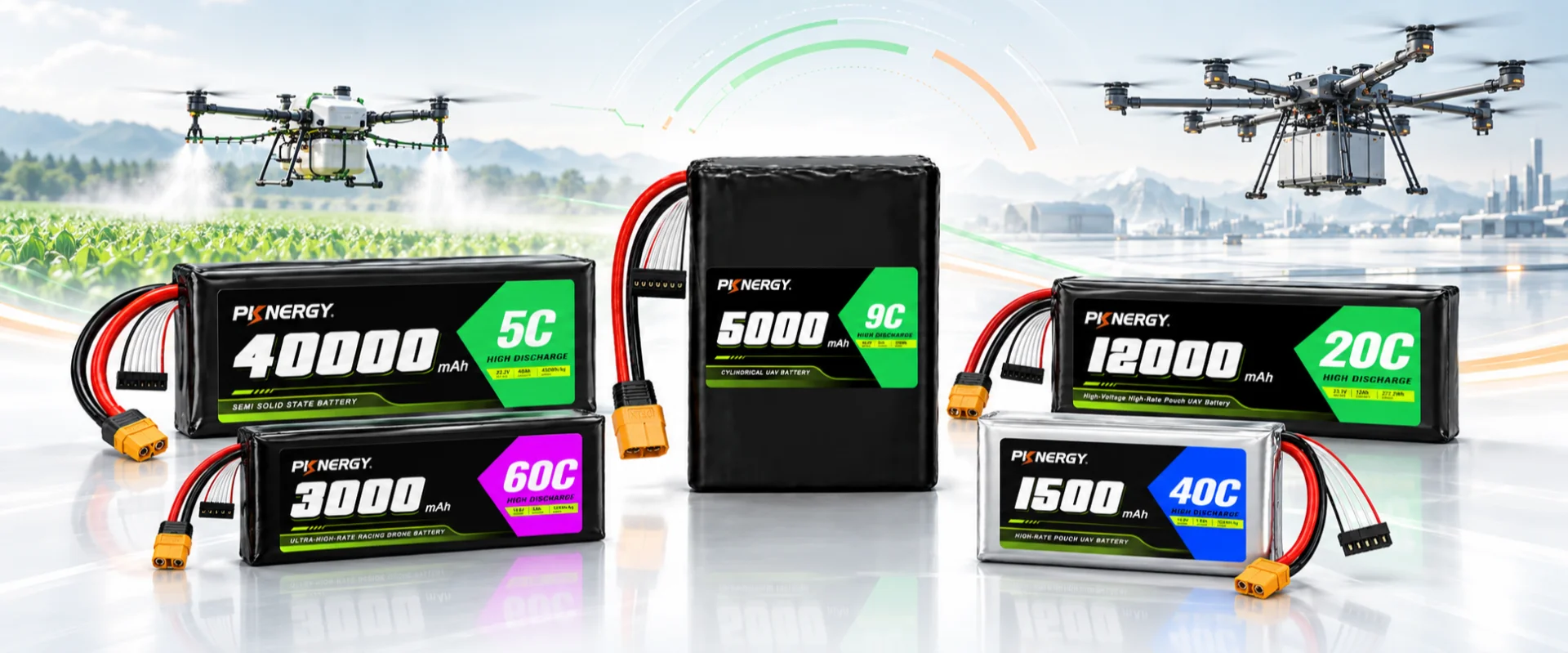
Choosing a UAV battery involves more than capacity alone. Energy requirements, discharge performance, voltage compatibility, weight and operating conditions all affect flight time, payload capability and overall performance.
01 / KEY PARAMETERS
Start with these core parameters to narrow down battery options for your aircraft and mission profile.
01 / ENERGY
450 Wh/kg*
Helps evaluate energy available relative to battery weight.
02 / POWER
2C–90C
Indicates current delivery capability within rated limits.
03 / CAPACITY
36–60 Ah*
Describes stored charge and helps estimate mission duration.
04 / LIFECYCLE
Cycles
Compare expected service life under defined usage conditions.
05 / SYSTEM
Voltage
Must match the aircraft power system and component requirements.
Specification note: Figures marked with an asterisk are illustrative selection references, not universal specifications. Verify the exact model, test conditions and whether the data refers to cells or a complete battery pack before publication.
02 / THE KEY DIFFERENCE
Energy and power describe two different aspects of battery performance. A suitable UAV battery must provide enough stored energy for the mission and sufficient power for the aircraft’s operating demands.
FLIGHT DURATION
How long can it fly?
ENERGY
Wh
ENERGY DENSITY
Wh/kg
MAIN CONCERN
Weight
Energy describes how much electrical energy a battery stores. For missions where flight time and payload matter, compare usable watt-hours, battery mass and average power consumption.
HIGH-LOAD PERFORMANCE
Can it deliver the required current?
DISCHARGE RATE
C-rate
CURRENT
Amps (A)
MAIN CONCERN
Voltage Sag
Check continuous and peak current limits, voltage sag, thermal performance and connector ratings.
THE SELECTION PRINCIPLE
Choose enough ENERGY for the mission and sufficient POWER for the load.
03 / READ THE LABEL
Understanding the key figures on a battery datasheet helps you compare configurations and check whether a pack fits your aircraft.
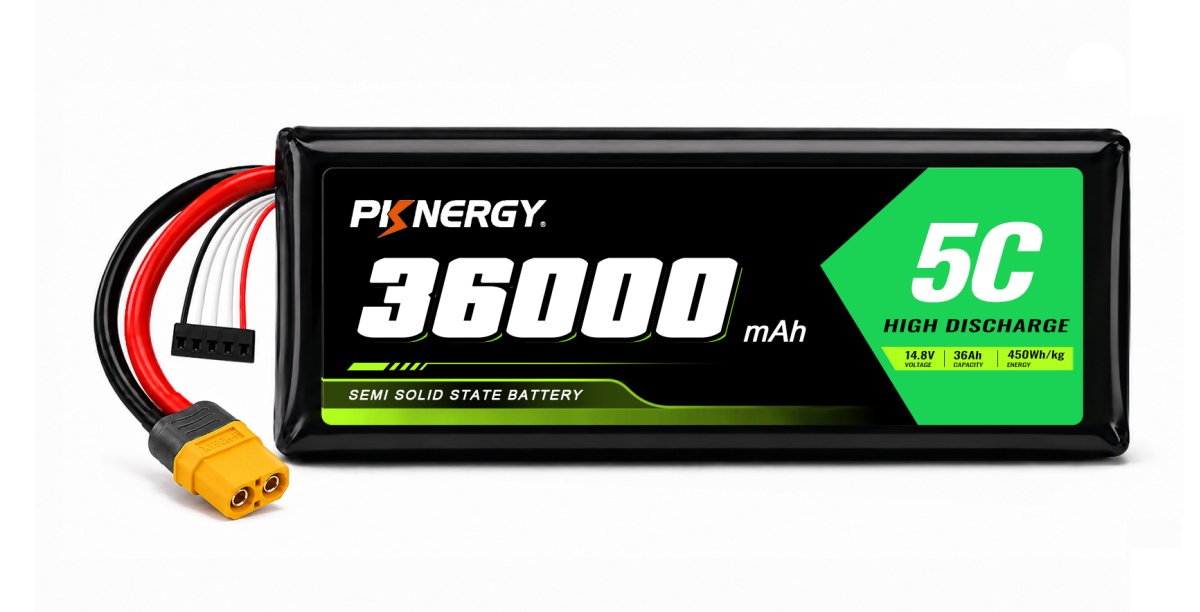
NOMINAL VOLTAGE
22.2 V
CAPACITY
36 Ah
CONFIGURATION
6S1P
DISCHARGE RATE
2C
Check both nominal and fully charged voltage against the aircraft system.
Indicates stored charge. Flight time also depends on load, usable capacity and temperature.
S represents cells in series; P represents parallel cell groups.
Confirm continuous and peak ratings, duration and thermal limits.
Example figures are for illustration only. Always use the actual battery datasheet and confirm configuration details with the supplier.
04 / QUICK CALCULATIONS
Use these basic calculations as an initial check. Final battery selection should be based on actual system requirements and verified ratings.
FORMULA 01
Cell nominal voltage × number of cells in series
3.7 V × 6
= 22.2 V
FORMULA 02
Capacity (Ah) × C-rate
5 Ah × 60C
= 300 A*
*The calculated value does not override the cell or pack’s rated current limit.
FORMULA 03
Nominal voltage × capacity
22.2 V × 36 Ah
= 799.2 Wh
05 / FROM REQUIREMENTS TO VALIDATION
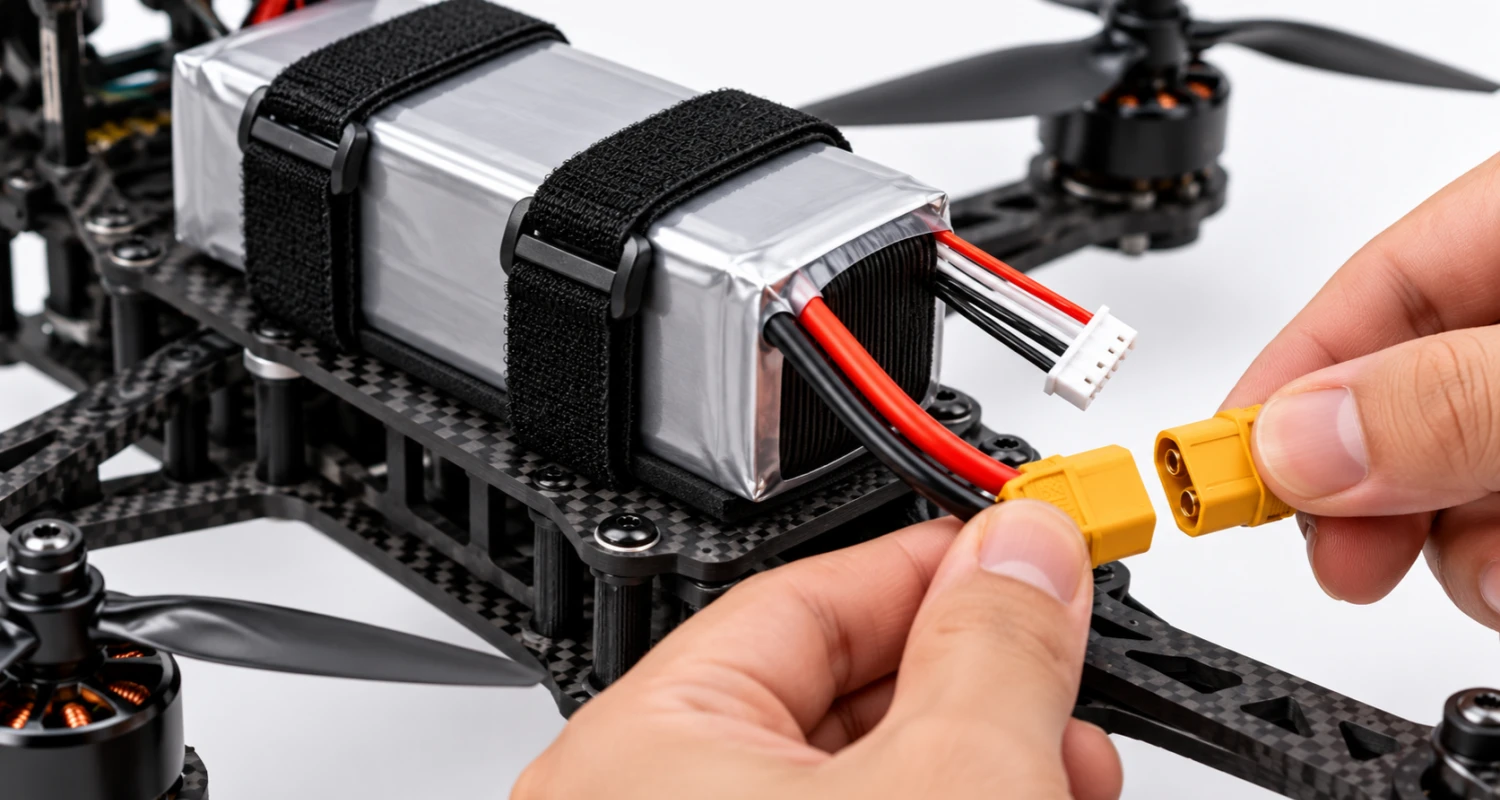
A structured evaluation helps ensure the selected battery fits the aircraft, the mission and the intended operating environment.
STEP 01
Identify payload, mission duration, aircraft weight and operating conditions.
STEP 02
Estimate energy needs and check continuous and peak current requirements.
STEP 03
Review voltage, capacity, pack mass and datasheet ratings.
STEP 04
Confirm connectors, dimensions, mounting, BMS and charging requirements.
STEP 05
Verify performance under representative loads and environmental conditions.
NEED A BATTERY FOR YOUR UAV?
Share your UAV model, voltage, capacity, discharge requirements and target dimensions. Our team can help evaluate a suitable battery configuration for your application.

Copyright © 2026 Shenzhen Pknergy Energy Co Ltd . All Rights Reserved | Privacy Policy | Terms & Conditions | Cookie Policy